Arriving at a meeting or wedding with a creased suit is an avoidable problem, and the fix is choosing the right packing method before you leave home.
Why suits wrinkle in a bag
Wrinkles form when fabric fibers are compressed or bent and held in that position long enough to set. Heat and humidity accelerate the process, which is why checked baggage in a warm cargo hold is harder on a suit than a cool overhead bin. Longer trips mean more settling time and more wrinkles. The goal of every packing method is to minimize sharp folds, distribute pressure evenly, and limit movement inside the bag.
Method 1: the garment bag
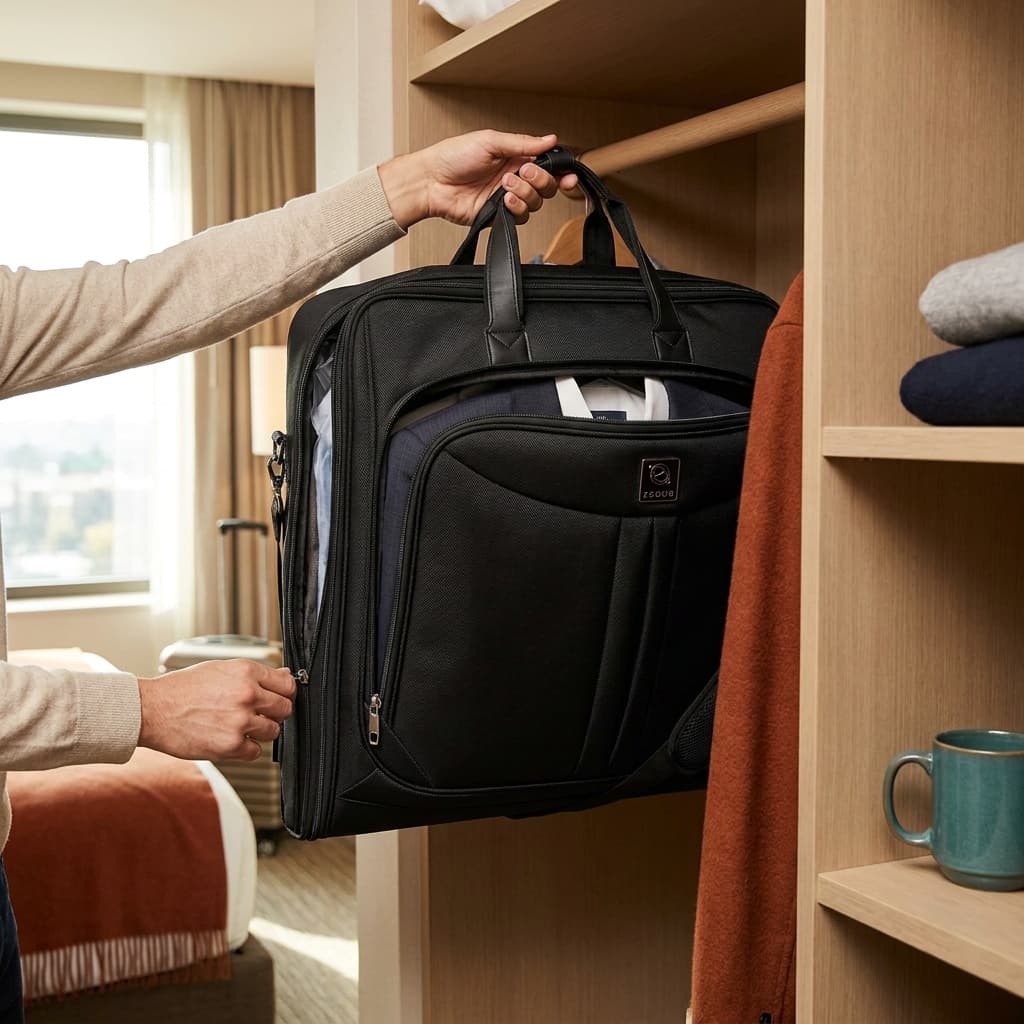
A dedicated garment bag (either a foldover bag or a carrier sleeve, like the ZEGUR Suit Carry On Garment Bag) keeps the jacket on a hanger for the first part of the journey. For a carry-on trip under about four hours, this is the most reliable option if the airline will let you hang it in a closet or lay it flat in the overhead bin.
The technique matters. Hang the jacket and trousers on a quality hanger. Cover with the bag. When you board, place it flat in the bin with nothing on top, or ask a flight attendant about the cabin closet. A garment bag crammed vertically into a stuffed overhead bin provides almost no benefit over folding, because the weight of other bags creates exactly the pressure you are trying to avoid.
Limitation: most carry-on garment bags still require folding the bag in half once. That fold runs across the jacket, and on flights longer than three to four hours the crease often sets anyway. Checked garment bags eliminate the fold but introduce handling risk and added luggage fees.
Method 2: the fold-and-tissue method
This is the approach most hotel concierges default to. Lay the jacket face-down, fold one shoulder inside-out into the other (the classic "inside-out shoulder" fold), then fold the jacket in thirds lengthwise. Layer tissue paper or a dry cleaning bag between every fold to reduce fiber-on-fiber friction and distribute pressure.
Trousers are folded along the crease line, laid flat, and placed beneath the jacket in the suitcase. The tissue paper or plastic bag trick works because it reduces the grip between fabric layers, so wrinkles have less traction to set.
Best for: a hard-sided roller bag where the suit can lie flat without other items stacked on top of it. Less reliable in a soft bag where compression is unpredictable.
Method 3: bundle wrapping
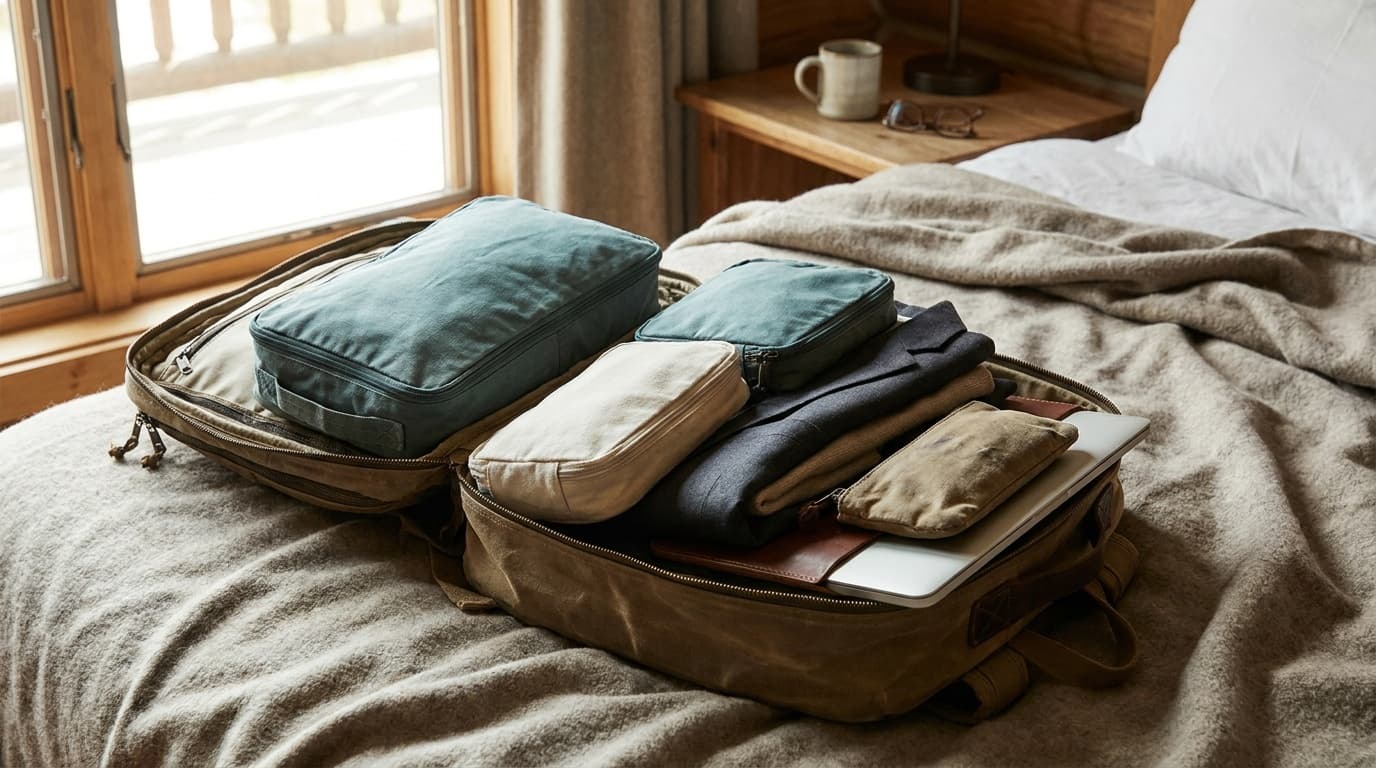
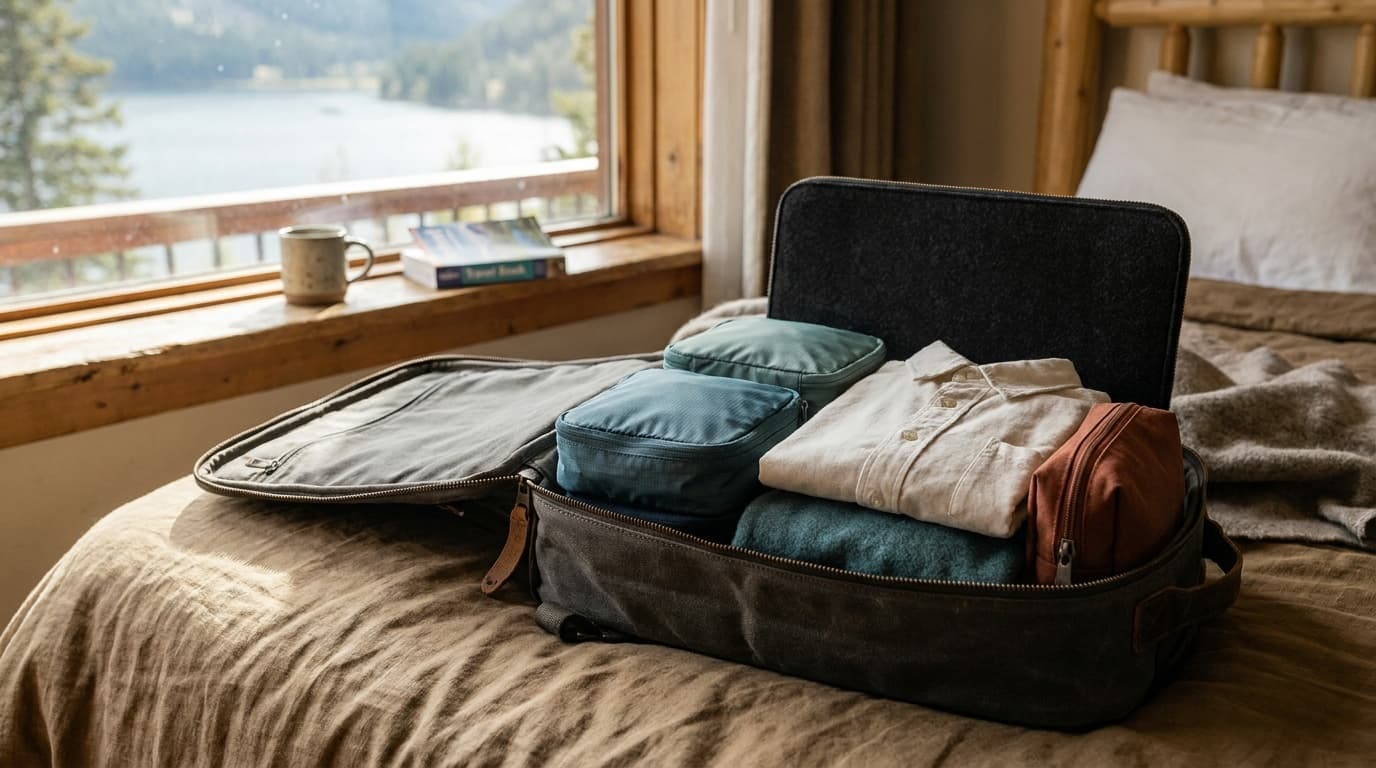
Bundle wrapping is the highest-effort method and produces the best results in a carry-on backpack or soft bag. The principle: wrap every garment around a soft central core (a packing cube full of clothes, a rolled sweater) rather than folding. Because nothing folds at a sharp angle, wrinkles have nowhere to form.
How to bundle wrap a suit
Jacket first
Lay the jacket face-up and spread it flat as the outermost layer.
Trousers second
Drape trousers across the jacket, leg seams aligned, waistband centered.
Shirts and layers
Stack shirts, then softer items, over the trousers.
Set the core
Place your filled packing cube or rolled items at the center.
Wrap inward
Fold each layer snugly around the core, jacket last, tucking edges under.
The bundle stays firm because every layer supports the next. Unpack it as soon as you arrive and hang the suit immediately.
Bundle wrapping works because fabric under even tension wrinkles far less than fabric bent at a sharp fold.
Fabric makes a bigger difference than method
No packing method fully compensates for the wrong fabric. Here is how common suit fabrics rank for travel:
- Worst: linen (wrinkles severely and visibly), 100% cotton suits, heavy unlined wool.
- Moderate: mid-weight wool (a classic 120s or 130s worsted), wool-polyester blends.
- Best: high-twist wool (Super 150s and above, though these are delicate), wool-nylon blends, and performance fabrics with stretch (Loro Piana Storm System, Scabal Tempo, and similar technical weaves).
If you travel frequently for business, a suit in a mid-weight wool-polyester blend or a performance wool is a better investment than a linen suit you will spend 20 minutes steaming before every meeting.
What to do on arrival
Hang the suit immediately after checking in. Do not leave it compressed in the bag while you shower or go to dinner.
For light creases: hang the jacket and trousers in the bathroom while you run a hot shower. Close the door. The steam relaxes fibers in 10–15 minutes. Do not hang directly in the spray. Let the garment cool and dry for another 10 minutes before wearing.
For deeper creases: use the hotel iron on the lowest wool-safe setting with a damp pressing cloth (a damp hand towel works). Never iron directly on the fabric surface.
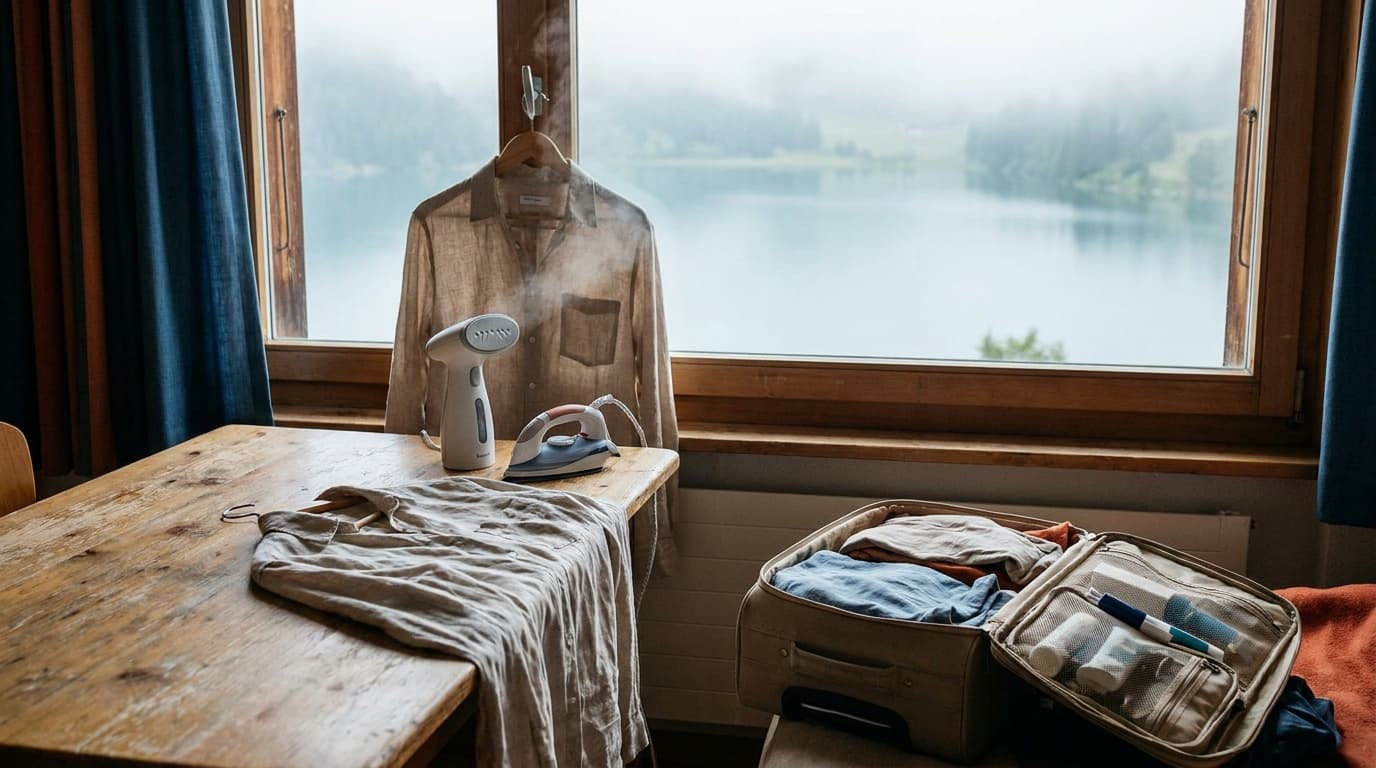
If your hotel room has no iron and the steam trick is not enough, a handheld travel steamer like the Jack & Rose K1 handles most suits quickly. Many business hotels also offer same-day pressing services, which is worth the cost before an important meeting.
Frequently asked questions
Can I carry a garment bag onto a plane as a personal item?
It depends on the airline and the bag. A thin, flat garment bag sleeve often qualifies as a personal item on US carriers if it fits under the seat, but a foldover garment bag the size of a carry-on counts as your carry-on allowance. Check your specific carrier's size rules before you fly. TSA has no restrictions on garment bags themselves.
Is a checked garment bag worth it to avoid folding?
For a trip of three or more days where you have a single important suit and want it to arrive in perfect shape, yes. The trade-off is baggage fees, wait time at the carousel, and handling by ground crews. For short trips or when you need to stay nimble, bundle wrapping in a carry-on is a more reliable end-to-end option.
Does packing a suit jacket inside out help?
Yes, for the inside-out shoulder fold specifically. Turning one shoulder inside-out into the other protects the lapels and chest lining, which are the hardest parts to steam back into shape. The outer fabric faces inward and is shielded from friction. This is one step in the fold-and-tissue method, not a standalone packing strategy.
For specific picks, see our guide to the best travel garment bags. Browse all travel guides or read how we research and rate gear.
Recommended gear
Our current top picks from the The best travel garment bags for wrinkle-free suits guide, if you are ready to buy.
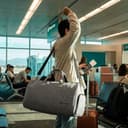
MODOKER
Modoker Convertible Garment Duffel Bag
Best Overall
Kit Score 7.7/10
$35.99 Price checked Oct 23, 4:16 PM CDT
Best for: Business travelers who want one carry-on bag that doubles as both a garment carrier and an overnight duffel.
- True carry-on compliance: duffel mode fits overhead bins at standard airline dimensions
- Shoulder strap attachment hardware has a documented failure rate; some owners report breakage on the first trip
- Style
- 2-in-1 convertible: garment bag + duffel
- Garment bag length
- 37.5 inches
- Duffel dimensions
- 22.8" x 11" x 11.8" (carry-on compliant)
- Duffel capacity
- 45 liters
- Weight
- 2.5 lbs
- Material
- Water-resistant polyester and jacquard
About this pick
The Modoker converts from a 37.5-inch hanging garment bag to a 45-liter carry-on duffel in one motion, letting business travelers skip the checked-bag line while keeping suits flat. The folded duffel fits standard overhead bins and includes a shoe pouch and dedicated small-item pocket.
Strengths
- True carry-on compliance: duffel mode fits overhead bins at standard airline dimensions
- 2-in-1 flexibility suits both short business trips and weekend travel without a second bag
- Lightweight at 2.5 lbs, leaving more room in your carry-on weight budget
Weaknesses
- Shoulder strap attachment hardware has a documented failure rate; some owners report breakage on the first trip
- Zippers are functional but not heavy-duty, so careful packing technique matters for longevity
Kit Score breakdown
AMAZON BASICS
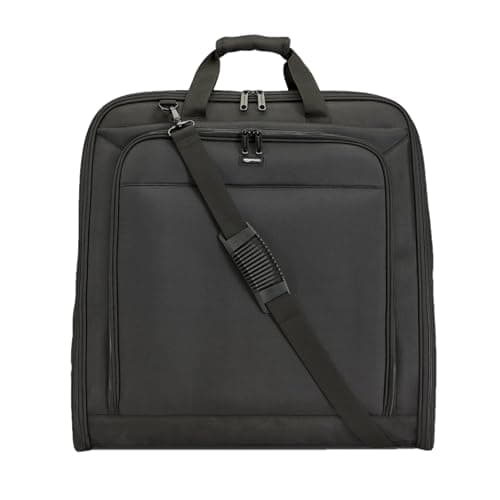
Amazon Basics 46" Premium Trifold Garment Bag
Best Value
Kit Score 8.0/10
$43.15 Price checked Oct 23, 4:16 PM CDT
Best for: Travelers who need a capable, no-frills garment bag for occasional trips and want to spend as little as possible without sacrificing structure.
- 1680D polyester outer fabric and leather-reinforced corners deliver durability well above the price point
- No rolling luggage attachment point, so it requires a separate carry when paired with a roller suitcase
- Style
- Trifold hanging garment bag
- Open length
- 45 inches (unfolded)
- Capacity
- Up to 3 suits or dresses
- Outer material
- 1680D polyester with leather-reinforced corners
- Lining
- 210D polyester
- Shoulder strap
- Adjustable and detachable
About this pick
Amazon's trifold garment bag holds up to three suits or dresses in a rugged 1680D polyester shell with leather corner reinforcements and a full interior organizer panel. A detachable shoulder strap and carry handle give you two hands-free options once you fold it down for the overhead bin.
Strengths
- 1680D polyester outer fabric and leather-reinforced corners deliver durability well above the price point
- Three-suit capacity with room for shoes, belts, and ties in separate pockets
- Trifold design folds compactly for carry-on overhead storage
Weaknesses
- No rolling luggage attachment point, so it requires a separate carry when paired with a roller suitcase
- The open length suits taller travelers but may be more than needed for shorter dresses
Kit Score breakdown
ZEGUR
ZEGUR Premium Suit Carry On Garment Bag
Editor's Choice
Kit Score 7.8/10
$69.75 Price checked Oct 23, 4:16 PM CDT
Best for: Business travelers who check bags often enough to care about shoulder and lapel shape, not just wrinkles, and want a semi-structured carry-on that fits real overhead bins.
- Semirigid piping protects suit shoulders and lapels in a way that soft bags cannot
- Shoulder strap anchor hardware has a documented reliability problem; treat the strap as a convenience, not a structural feature
- Style
- Semi-rigid structure garment bag
- Folded dimensions
- 22.99" x 22.01" x 4.02"
- Carry-on compliance
- Fits carry-on size limits on most major airlines when folded
- Capacity
- Up to 4 suits plus shoes and accessories
- Material
- 1800D polyester with semirigid structure piping
- Weight
- Under 3 lbs (1.3 kg)
About this pick
The ZEGUR uses semirigid structure piping to keep your suit shoulders from collapsing during transit, a feature usually found on bags costing far more. It folds to approximately 23 inches square that clears carry-on size limits on most major airlines, and the padded interior bar prevents hanger-point creasing across up to 4 hanging garments.
Strengths
- Semirigid piping protects suit shoulders and lapels in a way that soft bags cannot
- Folds to a 23-inch square that fits carry-on size limits on most airlines
- Rolling luggage attachment point keeps it secure when stacked on a suitcase
Weaknesses
- Shoulder strap anchor hardware has a documented reliability problem; treat the strap as a convenience, not a structural feature
- 40-inch open length works well for suits but is on the shorter side for full-length gowns
Kit Score breakdown
See all picks in The best travel garment bags for wrinkle-free suits
Keep going
Researched, not hands-on tested
Updated Jun 4, 2026Our recommendations draw on manufacturer documentation, retailer listings, owner feedback, and comparisons with alternatives.
As an Amazon Associate I earn from qualifying purchases. We may earn a commission from links here, at no extra cost to you. How we research →