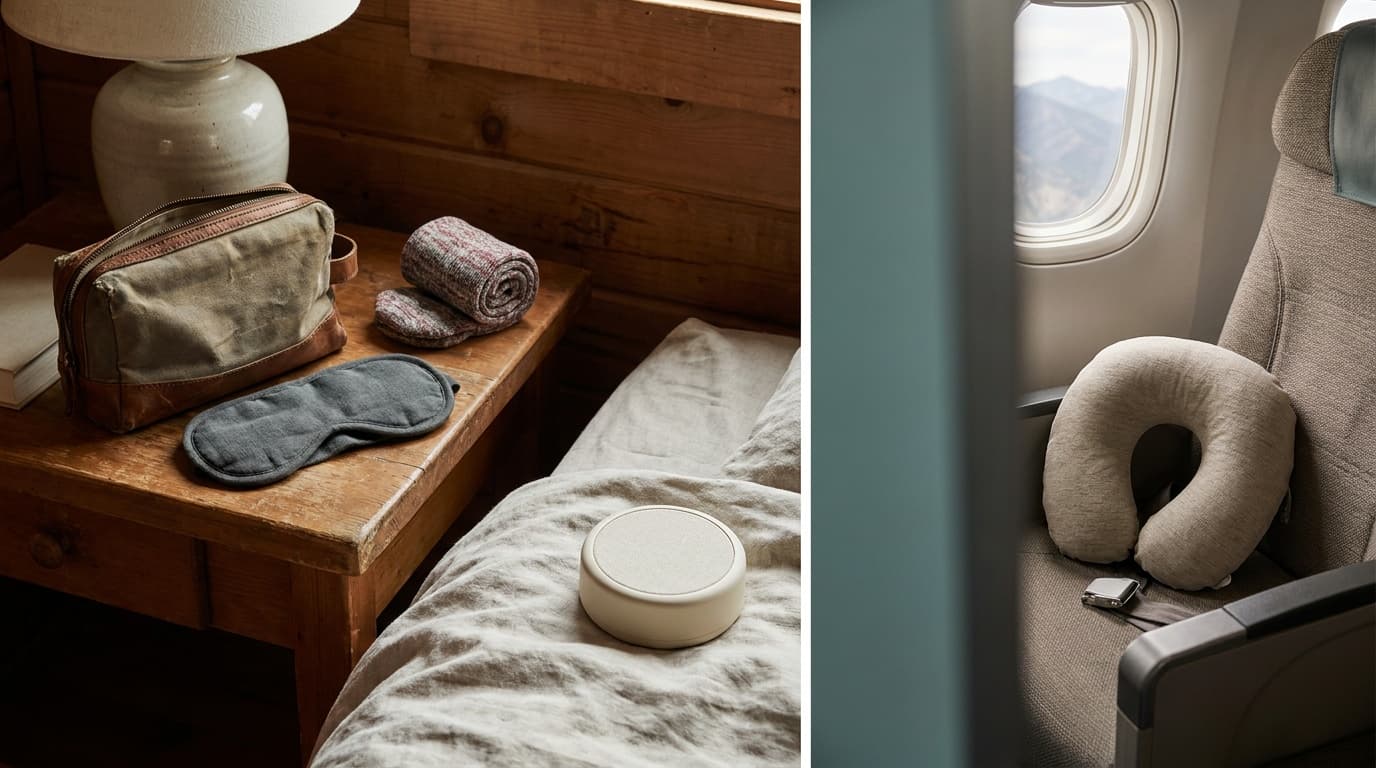
A noisy hotel room, a crying baby in seat 14B, a partner who snores: a portable white noise machine solves all three, but only if you buy the right one for how you actually travel.
Battery life: the number that decides everything
A white noise machine with a dying battery is useless at the worst possible moment. For overnight trips, 8 hours of continuous playback is the floor. Many budget machines advertise 8–10 hours but measure that at low volume; crank the volume to actually mask hotel corridor noise and you may get 5–6 hours instead.
Look for manufacturers that publish battery life at a specific volume level, typically 50–75% output. USB-C charging is worth prioritizing: you can top up from the same charger as your phone, and USB-C ports are now standard on most airlines' in-seat entertainment consoles.
Real sounds vs. looping files: why it matters
This is the most under-discussed spec in the category. White noise machines use one of two audio approaches.
Short-loop playback stitches a 20–90 second recording on repeat. At low volume in a quiet room, your conscious mind ignores the seam. In a light sleep state your auditory cortex does not. Many people report waking up or failing to fall asleep without knowing why; the loop is the reason.
Continuous mechanical or long-cycle digital audio has no perceptible seam. Electromechanical fan-based machines (like the classic LectroFan Evo) generate sound continuously from a spinning motor. Some digital machines use files long enough (30+ minutes) or synthesis algorithms that effectively eliminate the loop.
If you are a light sleeper or shopping for a baby, pay for non-looping audio (the LectroFan Micro2 generates its sounds digitally rather than replaying a short file). It is not a marketing distinction; it changes whether the machine actually works.
The loop length of a white noise machine is the single spec most buyers overlook, and the one most likely to explain why their last machine did not help.
Sound options: white, pink, brown, fan, and nature
All three colored noises mask sound, but they feel different.
- White noise distributes equal energy across all frequencies. It sounds hissy, like an old analog TV. It is the most effective at masking high-pitched sounds (voices, alerts).
- Pink noise rolls off the higher frequencies, so it sounds softer and more natural. Emerging sleep research suggests pink noise may support deeper sleep stages, though evidence is still preliminary.
- Brown noise (also called red noise) is deeper still, closer to a rumbling fan or distant waterfall. Many people find it easier to tolerate for long periods.
- Fan sounds replicate the acoustic texture of a box or tower fan without the airflow or noise of an actual fan. Good for people who grew up sleeping with a real fan.
- Nature sounds (rain, ocean, forest) loop noticeably on budget machines and work best for relaxation before sleep rather than sustained masking through the night.
For travel, having at least three or four options matters because hotel rooms vary: a room facing a street benefits from a different profile than a room next to an ice machine.
Volume and size: the core travel trade-off
The laws of physics apply here. A 60-gram puck produces less acoustic power than a 200-gram palm-size unit. If your use case is masking your own light snoring or softening a slightly noisy room, a pocket unit like the Yogasleep Hushh 2 is fine. If you need to cover a loud HVAC system, a neighboring room's TV, or a baby who needs genuine masking to stay asleep, you need a unit large enough to move real air.
Matching size to use case
Ultralight carry-on or daily bag
60–100 g puck; fits in a jacket pocket; adequate for personal sleep masking in moderately quiet rooms
Family travel, checked bag, or hotel families
150–250 g palm unit like the [Dreamegg D11 Max](/api/go?product=dreamegg-d11-max&retailer=amazon&article=how-to-choose-a-portable-white-noise-machine); higher max volume, better coverage for larger rooms
Baby sleep on the road
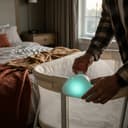
Dedicated travel baby soother; some combine white noise with a nightlight; physical controls are non-negotiable
Car travel and road trips
Battery or 12V plug-in; volume is less constrained; prioritize audio quality and loop length
Backpacking and camp
Look for IPX4 water resistance and at least 10-hour battery; some trekking headlamps clip to a tent loop
Timer, memory, and controls: the features worth paying for
Timers are useful for adults who want the machine to shut off after they fall asleep; they are actively harmful for babies, who benefit from continuous masking through light sleep cycles (roughly every 45–50 minutes for infants). If you are buying for a baby, disable or avoid the timer.
Volume memory (the machine returns to your last setting when powered on) eliminates the fumbling-in-the-dark problem on night two of a trip. It is a small thing that becomes essential at 3 a.m.
Physical controls over app controls. App dependency creates two problems: you need Bluetooth range (usually fine) and you need to unlock your phone (not fine at 2 a.m. next to a sleeping baby). A physical knob or button set is the more reliable interface for bleary-eyed volume adjustments.
Frequently asked questions
Are portable white noise machines allowed on planes and in carry-on bags?
Yes. White noise machines are battery-operated electronics and are fully TSA-permitted in carry-on and checked bags. There are no restrictions on their use during a flight, though airlines may ask you to use headphones if the speaker is audible to other passengers. USB-C charging cables are also unrestricted.
How loud should a white noise machine be for a baby?
The American Academy of Pediatrics (AAP) recommends keeping infant sleep environments below 50 dB for extended periods. White noise for infant sleep is generally used at 50–65 dB at the child's ear level, placed at least 7 feet (about 2 meters) from the crib or sleep surface. Do not place a machine inside the crib or directly next to an infant's head. Moderate volume at a reasonable distance is the safe and effective approach.
What is the difference between a white noise machine and a white noise app?
A dedicated machine runs independently of your phone, so it does not drain your phone battery, does not interrupt if you receive a call or notification, and does not require you to unlock your screen to adjust volume. Apps are a useful backup and work well for occasional use. For frequent travelers or infant sleep, a standalone machine is more reliable and simpler to operate in the dark.
For specific picks, see our guide to the best portable white noise machines. Browse all travel guides or read how we research and rate gear.
Recommended gear
Our current top picks from the Best portable white noise machines: 4 travel sound machines compared guide, if you are ready to buy.
ADAPTIVE SOUND TECHNOLOGIES
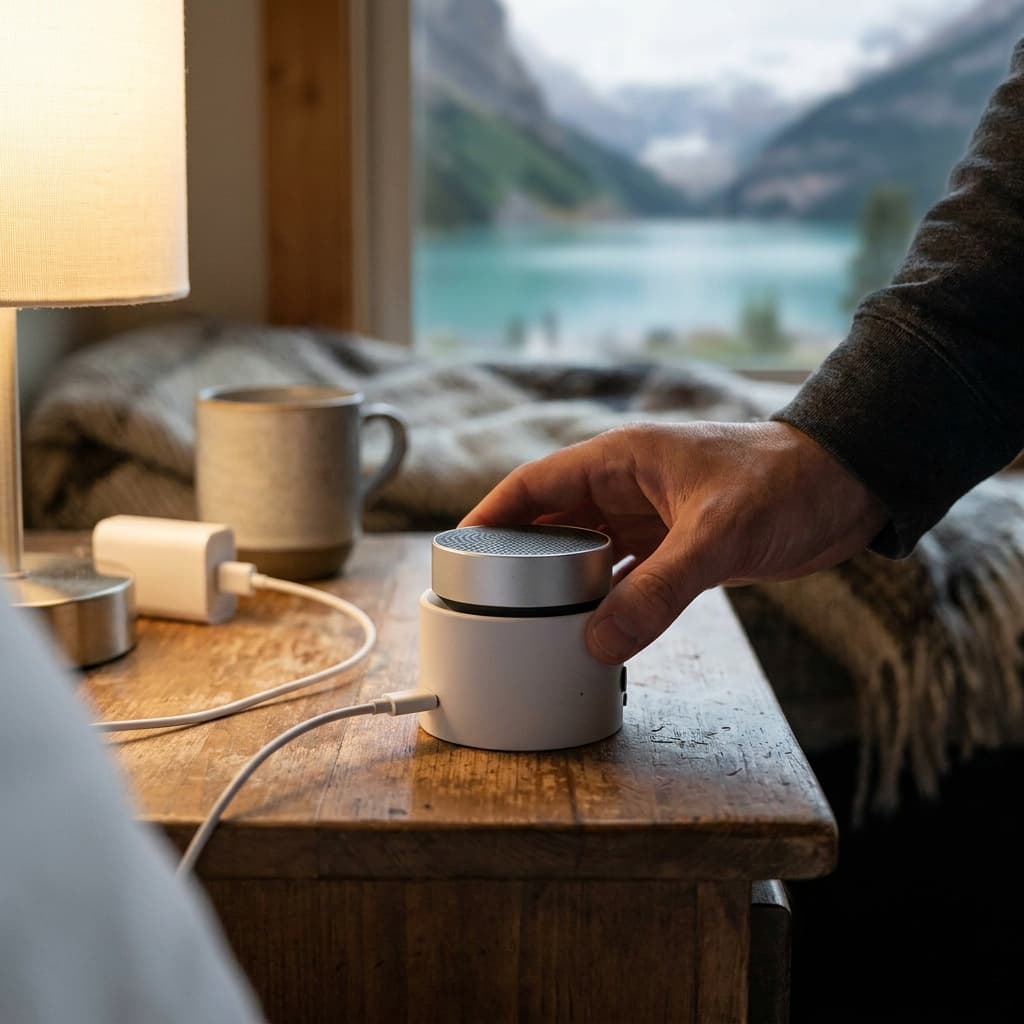
LectroFan Micro2 Portable White Noise Machine and Bluetooth Speaker
Best Overall
Kit Score 8.8/10
$54.95 Price checked Oct 23, 4:16 PM CDT
Best for: Solo travelers, backpackers, and light sleepers who need the smallest possible machine with the longest battery run time.
- Rated for up to 40 hours as a sound machine, the longest in this group
- No auto-off sleep timer, which some travelers rely on for battery conservation
- Battery life
- Up to 40 hours (white noise), 20 hours (Bluetooth)
- Sounds
- 11 non-looping (4 white noise, 5 fan, 2 ocean)
- Weight
- Not published; independent reviews report about 6 oz
- Dimensions
- 2 x 2 x 2.1 inches
- Charging
- USB, cable and carry case included
- Timer
- None
About this pick
The Micro2 packs 11 digitally generated, non-looping sounds into a 2-inch cube (Adaptive Sound does not publish a weight; independent reviews put it near 6 oz), making it the go-to compact machine for hikers, frequent fliers, and anyone who counts every gram. It doubles as a Bluetooth speaker, so it earns its carry weight twice over.
Strengths
- Rated for up to 40 hours as a sound machine, the longest in this group
- Digitally generated sounds mean zero audible loops, unlike recorded-sample machines
- Tiny footprint fits any kit bag or carry-on pocket
Weaknesses
- No auto-off sleep timer, which some travelers rely on for battery conservation
- Limited bass means it cannot fully mask low-frequency city traffic or footsteps from upstairs neighbors
Kit Score breakdown
DREAMEGG
Dreamegg D11 Max Portable White Noise Machine
Best Value
Kit Score 8.8/10
$20.99 Price checked Oct 23, 4:16 PM CDT
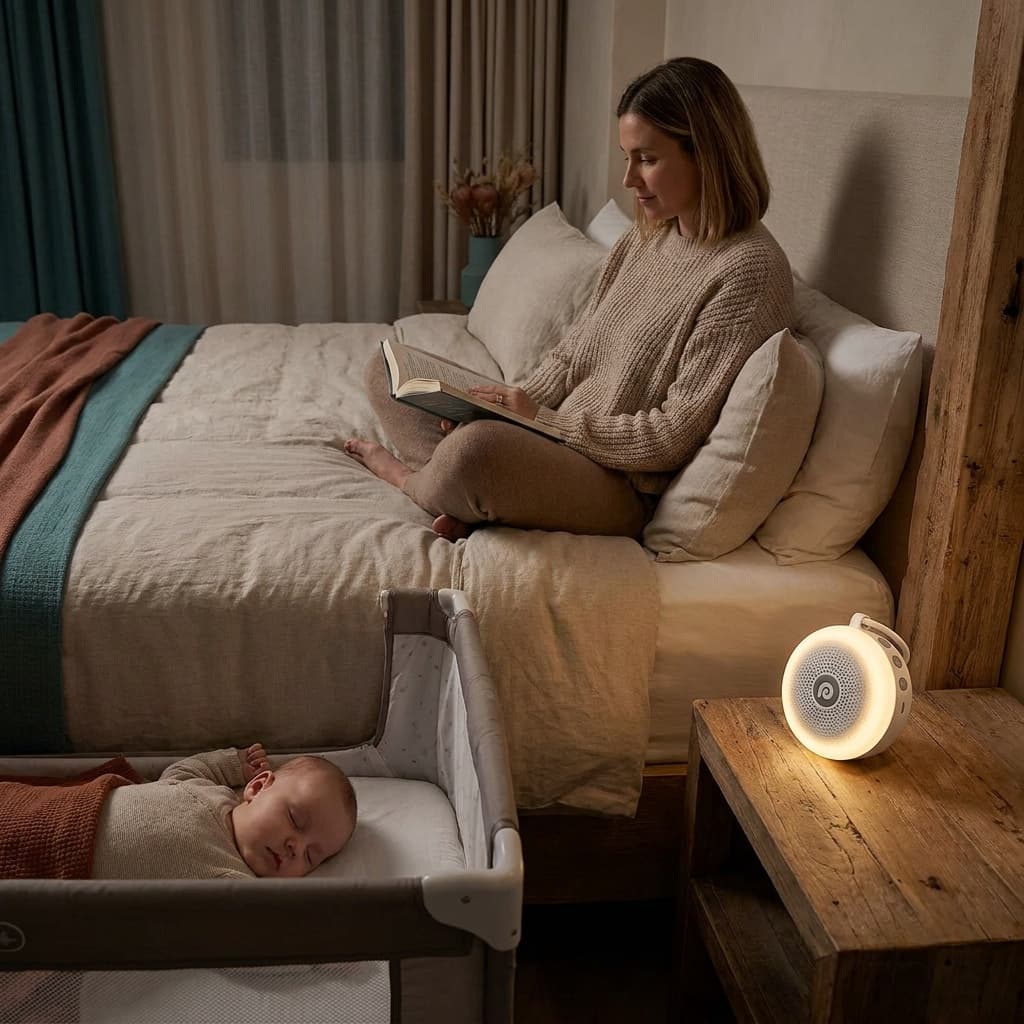
Best for: Families traveling with babies or toddlers who need powerful, bass-rich white noise and do not mind the extra weight.
- Owners describe the bass-forward white noise as enough to cover hotel hallway noise and outdoor traffic
- Heavier and bulkier than ultra-compact options like the Micro2
- Battery life
- 1800 mAh; no hour rating published (owners report a full night at medium volume)
- Sounds
- 21 (white noise, fan, nature, lullabies)
- Weight
- 10.2 oz (290 g)
- Dimensions
- 4 x 3.7 x 1.8 inches
- Timer
- 30, 60, 90 minutes, or continuous
- Memory
- Remembers last sound, volume, and timer setting
About this pick
The D11 Max delivers noticeably bass-rich white noise (Dreamegg publishes no decibel rating), with 21 sounds, a child lock, and a built-in memory function that recalls your settings between charges. It rides the sweet spot between sound quality and price for families who travel with young children.
Strengths
- Owners describe the bass-forward white noise as enough to cover hotel hallway noise and outdoor traffic
- Memory function retains sound and volume between uses, unlike most budget machines
- USB-C charging, clip, and lanyard included for stroller or bag attachment
Weaknesses
- Heavier and bulkier than ultra-compact options like the Micro2
- Bright LED status light requires covering in a dark room
Kit Score breakdown
YOGASLEEP
Yogasleep Hushh 2 Portable Sound Machine
Editor's Choice
Kit Score 8.8/10
$29.98 Price checked Oct 23, 4:16 PM CDT
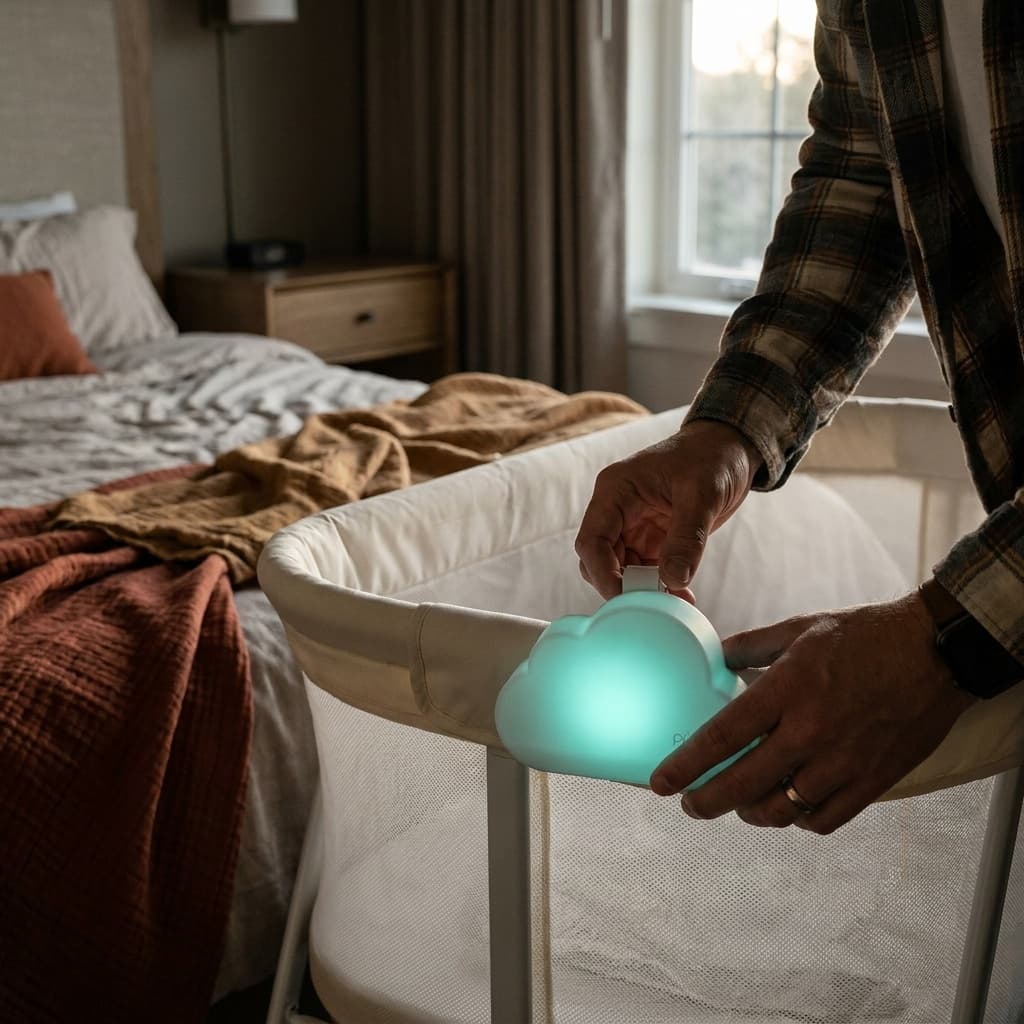
Best for: Parents traveling with infants or toddlers who want a trusted brand, a night light, and a machine that handles rough diaper-bag treatment.
- 33-hour rated battery in a 5.6 oz body strikes the best balance of longevity and portability in this group
- Only 6 sounds, so adults who want a broad library of fan types or nature options will find it limiting
- Battery life
- Up to 33 hours per charge
- Sounds
- 6 (signature Dohm fan sound, white noise, nature, melodies)
- Weight
- 5.6 oz (159 g)
- Dimensions
- 1.34 x 3.39 x 4.02 inches
- Timer
- 30, 60, or 120 minutes
- Extras
- Dimmable night light, backlit buttons, reinforced clip, toddler lock
About this pick
The Hushh 2 is the updated version of one of the most-trusted portable machines in the Yogasleep line, adding a reinforced clip, backlit buttons, a dimmable night light, USB-C charging, and a doubled sound library over the original. Yogasleep lists it as HSA/FSA eligible.
Strengths
- 33-hour rated battery in a 5.6 oz body strikes the best balance of longevity and portability in this group
- Backlit buttons and dimmable night light are genuinely useful for middle-of-the-night adjustments without waking a baby
- Reinforced clip, wipe-clean body, and toddler lock suit daily parent-and-baby travel
Weaknesses
- Only 6 sounds, so adults who want a broad library of fan types or nature options will find it limiting
- Wall adapter not included; USB-C cable only, and Yogasleep asks you to use that cable
Kit Score breakdown
See all picks in Best portable white noise machines: 4 travel sound machines compared
Keep going
Complete loadoutLong-flight comfort kitFive packable pieces for neck support, darkness, quieter cabins, leg comfort, and more consistent sleep away from home.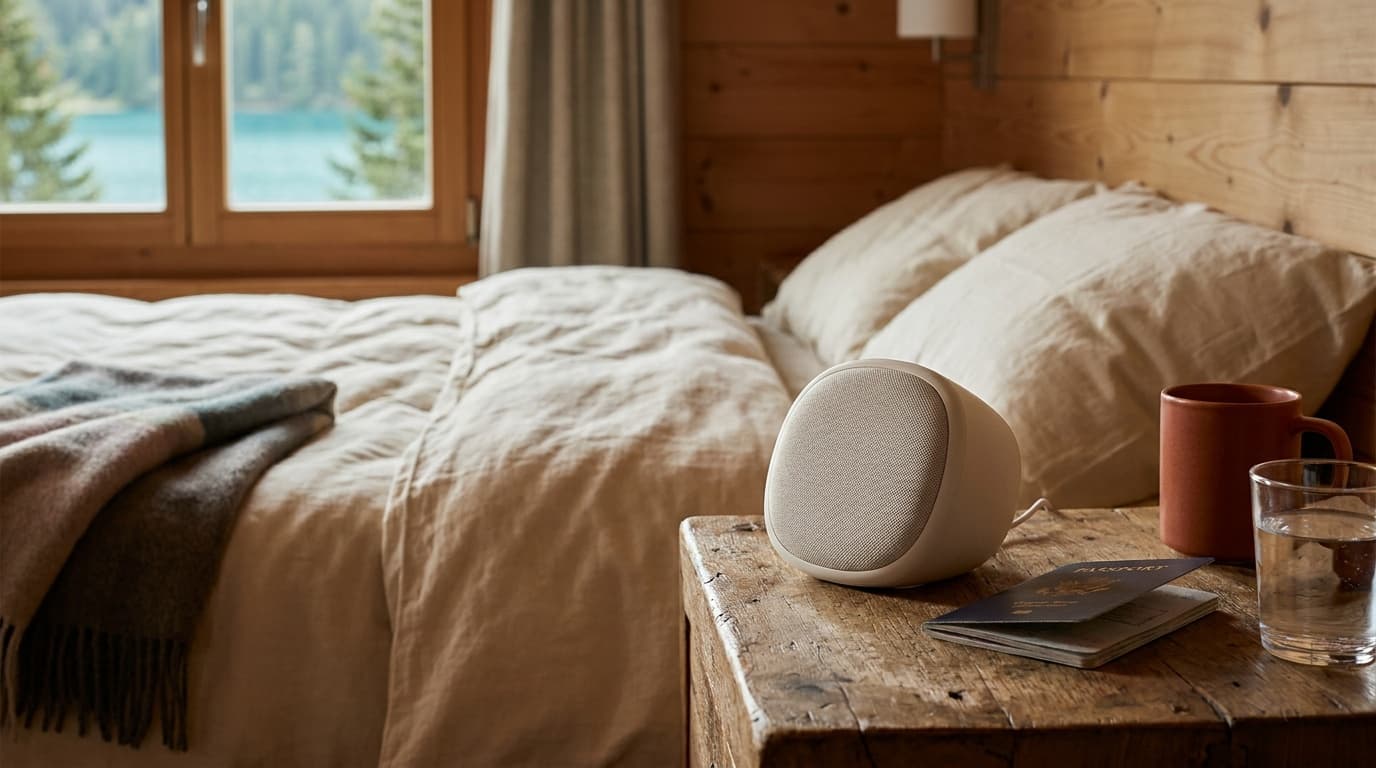
Researched, not hands-on tested
Updated Jul 8, 2026Our recommendations draw on manufacturer documentation, retailer listings, owner feedback, and comparisons with alternatives.
As an Amazon Associate I earn from qualifying purchases. We may earn a commission from links here, at no extra cost to you. How we research →