When to go
Conditions, crowds, and what each season asks you to pack.
Spring
Pleasant highs in the 70s-80s F, but March and April bring strong winds and blowing sand.
Pack Wind layer, eye protection, and a buff or scarf for blowing gypsum.
Summer
Hot, with highs in the 90s-100s F; afternoon monsoon thunderstorms roll in July and August.
Pack Far more water than you think, sun shade, and an early start to beat the heat.
Fall
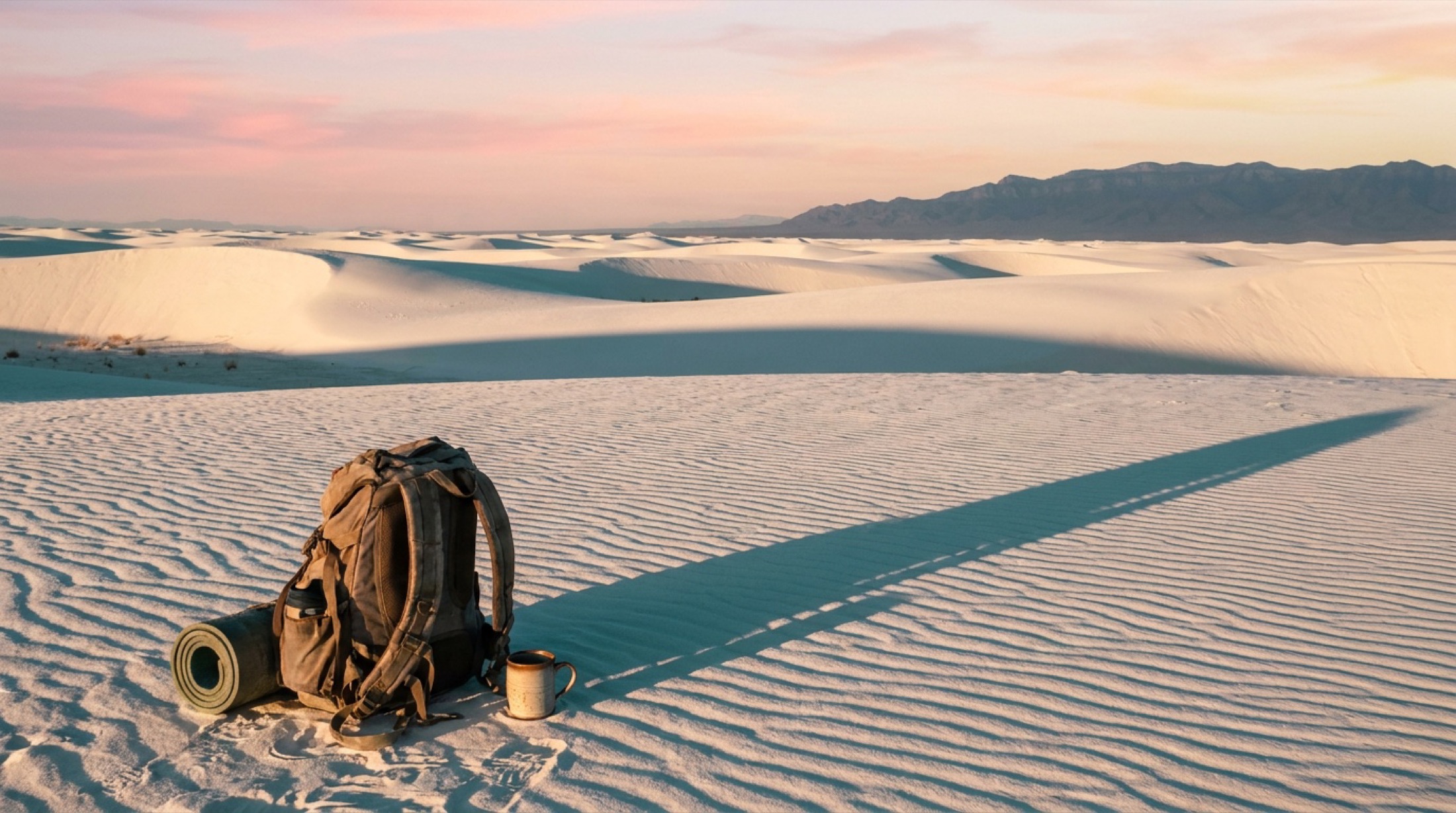
The sweet spot: warm days in the 70s-80s F, cool nights, calm air, and clear skies.
Pack Light layers for warm afternoons and a jacket for the chilly evening dune walk.
Winter
Cool and quiet, highs in the 50s-60s F with cold nights that can dip below freezing.
Pack A warm layer for morning and a windproof shell; the white sand stays cold underfoot.
Crowds by month, from NPS visit counts
Busiest: March. An average March brings about 99,400 recreation visits to White Sands, roughly 3,210 a day. Peak crowds run March to April.
Quietest: January. About 40,400 visits, 41% of the busiest month.
- Low
- Moderate
- High
- Peak
Bar height is each month's average visits compared with the busiest month. Low is under 25% of that peak, Moderate 25 to 49%, High 50 to 74%, Peak 75% and up.
See the monthly numbers
| Month | Avg visits | Share of year | Crowds |
|---|---|---|---|
| January | 40,409 | 6% | Moderate |
| February | 43,157 | 6% | Moderate |
| March | 99,448 | 14% | Peak |
| April | 78,222 | 11% | Peak |
| May | 67,583 | 9% | High |
| June | 60,926 | 9% | High |
| July | 61,187 | 9% | High |
| August | 44,797 | 6% | Moderate |
| September | 45,066 | 6% | Moderate |
| October | 60,994 | 9% | High |
| November | 51,453 | 7% | High |
| December | 58,307 | 8% | High |
Source: NPS Visitor Use Statistics, monthly recreation visits, averaged over 2023–2025. October and November 2025 are left out of the averages because of the federal government shutdown. Visits count entries, not unique people. NPS monthly report for White Sands · Crowd calendar for all 63 parks
White Sands weather by month
Average daily highs and lows, plus monthly precipitation, from NOAA's 1991-2020 climate normals for the visitor center at the dunefield entrance. Shaded months are the park's best season. Tap a month to build a pack list for it.
| Month | Jan | Feb | Mar | Apr | May | Jun | Jul | Aug | Sep | Oct | Nov | Dec |
|---|---|---|---|---|---|---|---|---|---|---|---|---|
| High (F) | 57 | 63 | 71 | 79 | 88 | 97 | 97 | 95 | 89 | 79 | 67 | 57 |
| Low (F) | 22 | 27 | 33 | 41 | 50 | 60 | 65 | 64 | 56 | 42 | 29 | 22 |
| Precip (in) | 0.5 | 0.4 | 0.2 | 0.3 | 0.5 | 0.7 | 1.6 | 1.9 | 1.5 | 1.1 | 0.5 | 0.7 |
| Snow (in) | 0.8 | 0.0 | 0.0 | 0.0 | 0.0 | 0.0 | 0.0 | 0.0 | 0.0 | 0.1 | 0.0 | 0.7 |
Station WHITE SANDS NATL MON (USC00299686), 4,006 ft, under a mile from White Sands Visitor Center.
Source: NOAA NCEI U.S. Climate Normals, 1991-2020 monthly averages. Averages describe a typical year, not a forecast; check current conditions and alerts before you go. Precipitation includes the water in melted snow.
Top things to do
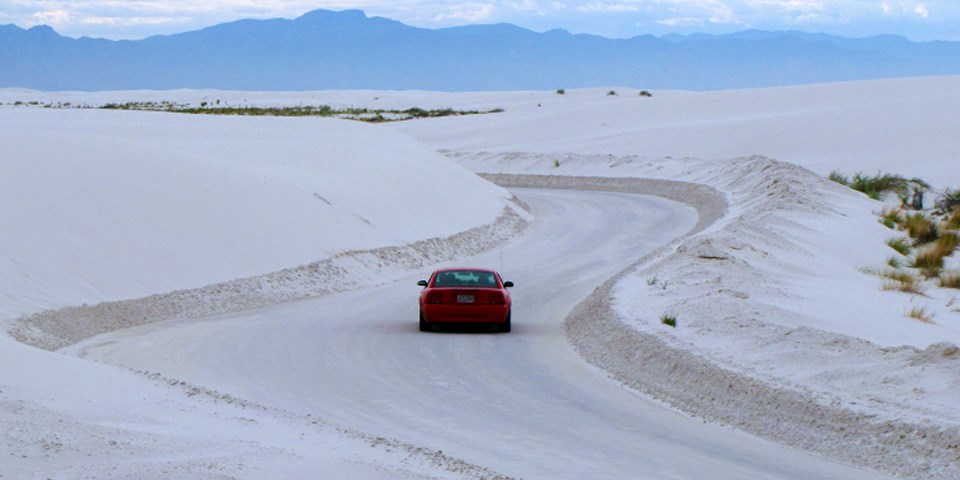
Dunes Drive
The 8-mile scenic road from the visitor center into the heart of the dunefield, ending in loops you can park and play in.
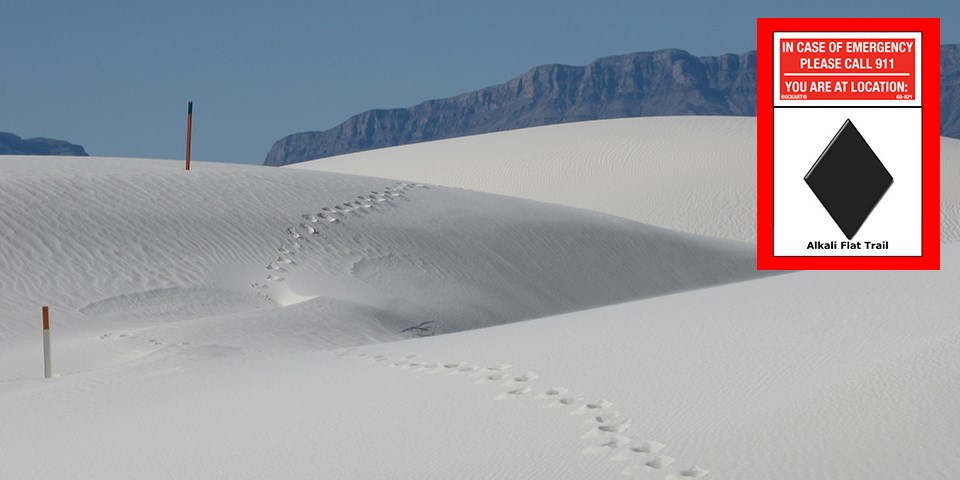
Alkali Flat Trail
A 5-mile loop across the tallest, most remote dunes; markers only, no shade, and easy to lose your bearings.
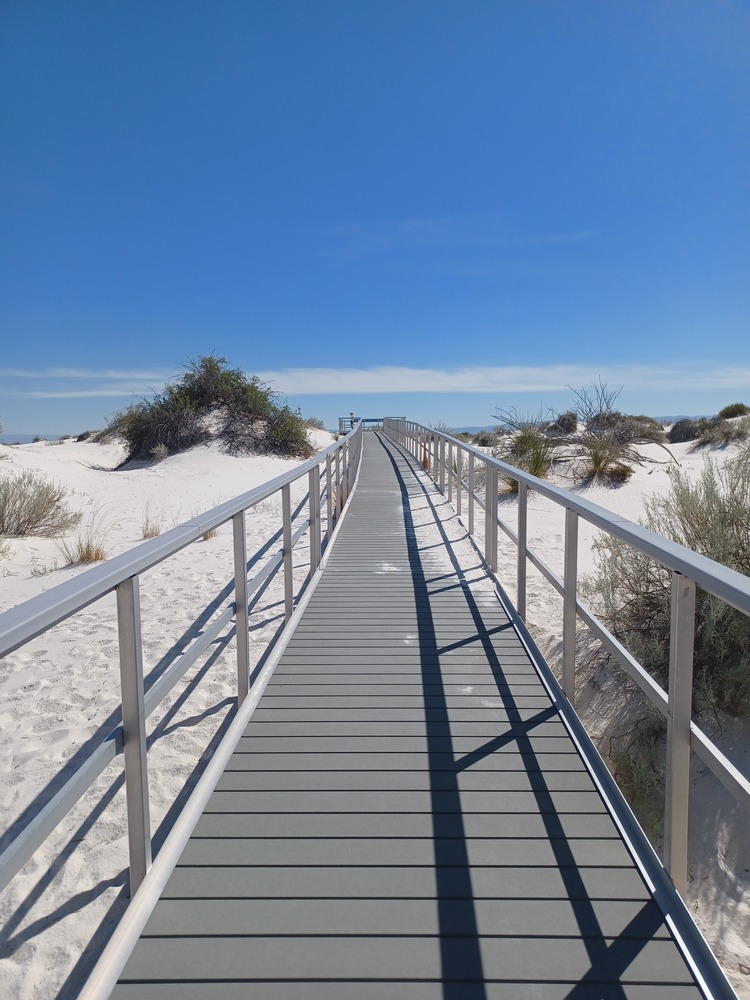
Interdune Boardwalk
A flat, accessible elevated walk with signs explaining the plants and animals that survive in the gypsum.
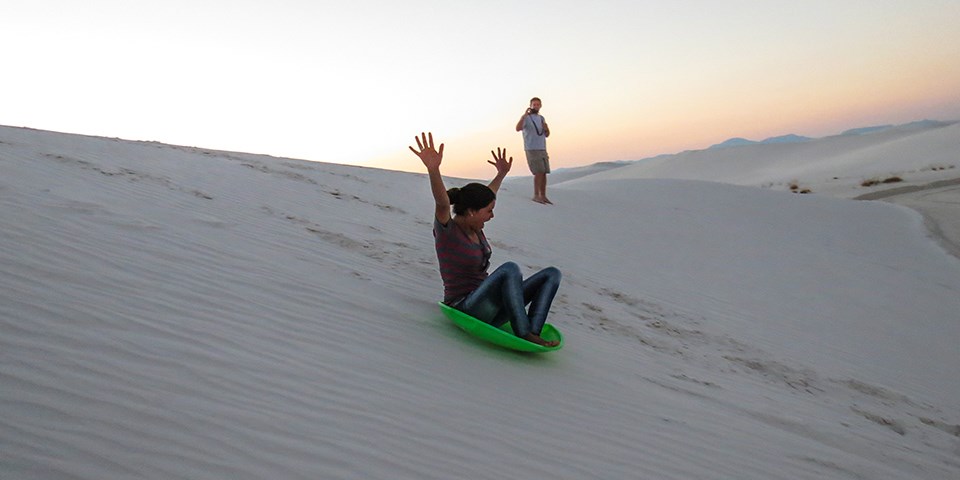
Sledding the dunes
Rent or buy a waxed plastic saucer at the gift shop and slide the steep dune faces; a classic White Sands rite.
Sunset and full-moon programs
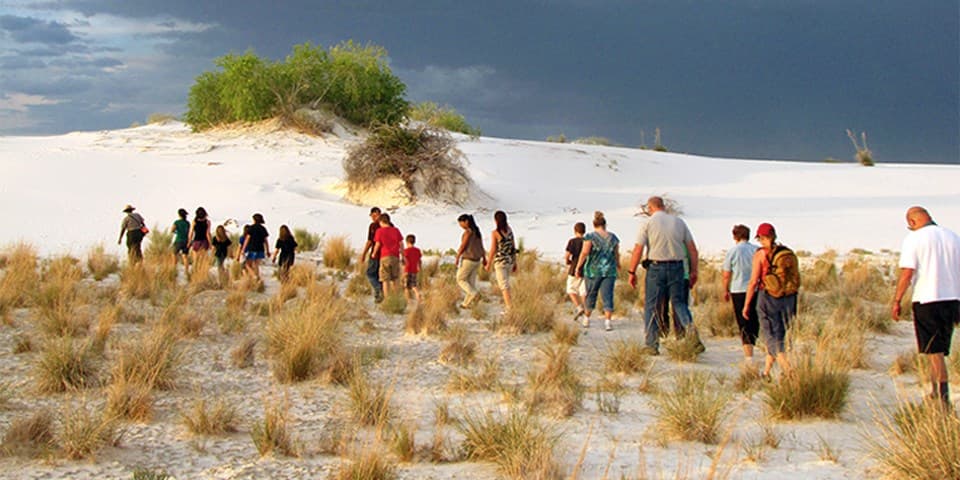
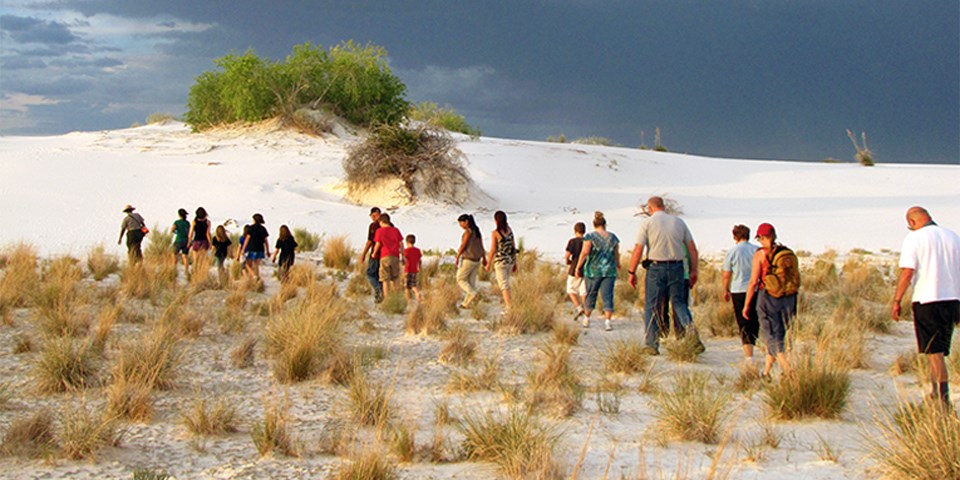
Ranger-led strolls timed to golden hour and monthly full moons, when the sand glows and the crowds thin.
Anchor the day around Dunes Drive
Put the access rule first: shuttle, parking, timed-entry, or reservation windows should decide the order of the day. For one day in White Sands, make Dunes Drive the non-negotiable, add Alkali Flat Trail only if the first stop runs clean, and keep Interdune Boardwalk as the flexible finish.
- 1Start with Dunes Drive: The 8-mile scenic road from the visitor center into the heart of the dunefield, ending in loops you can park and play in.
- 2Add Alkali Flat Trail: A 5-mile loop across the tallest, most remote dunes; markers only, no shade, and easy to lose your bearings.
- 3Use Interdune Boardwalk as the optional finish, not as a reason to rush the whole day.
Where to stay
Stay strategy
Choose the base that protects the permit window.
Stay strategy
Stay in Alamogordo for speed, Las Cruces or El Paso for more options.
White Sands has no lodging, no developed campground, and recent backcountry camping suspensions, so the base is outside the park. Alamogordo is the simple 20-minute base. Las Cruces adds more restaurants and rooms. El Paso works for flights, but it turns sunset or full-moon timing into a longer drive.
- Closest base
- Alamogordo, about 20 minutes
- More lodging
- Las Cruces, about 1 hour
- Largest airport
- El Paso, about 90 minutes
- Watch item
- Highway 70 missile-test closures
Compare base options
Use the options below to protect the permit, pickup, and early-start parts of the trip before you optimize for comfort.
Paid links: we may earn a commission if you book, at no extra cost to you.
- Best for
- Sunset returns, quick morning access, families, and keeping the drive short
- Tradeoff
- Smaller lodging and dining pool.
Planning detail
Choose Alamogordo if White Sands is the reason for the trip. It gives you the easiest sunset, full-moon, or weather-adjusted return to the dunes.
- Best for
- More rooms, restaurants, and a broader southern New Mexico itinerary
- Tradeoff
- About an hour each way, before any road-closure delay.
Planning detail
This is a good base when White Sands is part of a larger trip and you want more after-dark choices than Alamogordo offers.
- Best for
- Airport convenience and chain-hotel depth
- Tradeoff
- Sunset or full-moon visits become a 90-minute drive back afterward.
Planning detail
Use El Paso for arrival or departure nights. For a park-focused day, move closer or accept that Highway 70 closures can disrupt timing.
Closure check
Check Highway 70 status the morning of your visit, missile tests can close the route.
Timing
Late afternoon is often the best balance of cooler sand, better light, and enough time to sled or walk.
Camping reservations
Camping reservations
You cannot camp in White Sands right now: backcountry camping is closed with no reopening date.
The park's only camping was ever a handful of hike-in backcountry sites in the dunes, and those are closed for site rehabilitation with no reopening date announced. Plan on a bed in Alamogordo and catch the dunes at sunset instead; camping here was never something you could book ahead anyway.
Reviewed June 11, 2026
Booking window
Nothing to book: backcountry camping is closed indefinitely, and even when open, permits were issued in person on the day of camping only, never in advance.
- Backcountry camping is closed due to rehabilitation of the camping sites; the NPS has not set a reopening date, so check the park's current conditions page before planning an overnight.
- There is no frontcountry campground, no RV camping, and no overnight parking; the park gates close every night.
- Dunes Drive can also close on short notice for missile range tests, so confirm hours and alerts the morning you visit.
- For drive-in camping, look outside the park around Alamogordo: New Mexico state parks and the Lincoln National Forest in the Sacramento Mountains are the closest real options.
Where to book or verify
The official camping page; treat its closure notice as the source of truth.
Closure alerts, Dunes Drive status, and missile-test closures live here.
Covers where to sleep in and near the park, including the current status of backcountry camping.
Check for federal campground, backcountry, tour, and permit inventory tied to this park.
Use this for wilderness permits, timed systems, tours, and other park-specific reservations.
Campgrounds to know
Backcountry camping area (dunefield)
Details- Booking
- Closed; no advance booking existed even when open.
- Season
- Closed indefinitely for site rehabilitation.
- Sites
- Hike-in tent sites out in the gypsum dunes, no water, no facilities.
- When it reopens, this is one of the most surreal overnights in the park system: white dunes, dark skies, and total quiet. Until then, do not plan a trip around it.
Getting there and practical info
Treat the vehicle plan as part of the itinerary.
Road distance, road surface, fuel, and daylight can matter as much as the final trail or viewpoint.
Getting there
Get to White Sands, then make the road plan honest.
- Nearest airport
- El Paso International (ELP), about 85 miles and 90 minutes south. Alamogordo's small regional airport is 20 minutes away but has limited commercial service.
- Access rhythm
- Car required
- Region
- New Mexico
Car strategy
The park entrance is on US Highway 70, between Alamogordo (20 minutes northeast) and Las Cruces (about an hour west).
Fly in
Fly into El Paso International, about 85 miles and 90 minutes south, and rent a car; there is no public transit to the park.
Car strategy
Note that US-70 through the area can close without much warning for missile tests at the surrounding White Sands Missile Range, so confirm road status the morning of your visit.
Book ahead
- Rental cars at El Paso International (ELP)Paid link, Economybookings
- Guided tours in White SandsPaid link, Viator
Paid links: we may earn a commission if you book, at no extra cost to you.
Pair this with lodging: the closest bed is not always the simplest one if road time, road quality, or fuel stops dominate.
Plan your trip
Build one complete pack brief from White Sands's season, activity, and trip length. Fine-tune an individual calculation only if you need it.
Fine-tune water, pack size, warmth, or stove fuel
Build around conditions
Let season, elevation, and weather set the plan.
Plan your trip
4 quick tools, already seeded for White Sands. Tune the numbers around temperature swings, footing, layers, and how much margin the route needs.
What to pack
Start with the gear decisions White Sands changes: water, footing, weather, and overnight needs. The checklist is there once your route and dates are set.
Kit Authority
White Sands packing list
0 of 22 packed. Check items as you pack, then take this list to the store, trailhead, or campsite.
Pack planning
Decide what White Sands asks of your kit before you start checking boxes.
Use this as a constraint check while you are still shaping the trip. The active checklist becomes useful once your route, dates, and sleep plan are set.
- First constraintHydration and exposureWater, Electrolyte mix, hat, sunscreen, sunglasses, 4 more
- Route realityFooting and tractionHiking boots, Hiking socks, Trekking poles
- Load choicePack and carry systemBackpacking pack
- If overnightSleep and shelterBackpacking tent, Sleeping bag, Sleeping pad, 1 more
Checklist mode
22 items, grouped for the trip you are actually taking.
- Dates and season are set.
- Primary route, campground, or lodge is chosen.
- Water, footwear, and overnight needs are sized.
One researched pick
The first gear decision for White Sands
A stable daypack is the one purchase that organizes water, layers, food, first aid, and the small safety margin.
We may earn a commission from links on this page, at no extra cost to you. Product prices and availability are accurate as of the date/time indicated and are subject to change. Any price and availability information displayed on Amazon at the time of purchase will apply to the purchase of this product.

THE DAY-HIKE PICK
Osprey Talon 22
Best Overall
Kit Score 8.6/10
$169.95 Price checked Oct 23, 6:22 AM CDT
Best for: Hikers who want a proven all-around daypack with solid load support, plenty of adjustment, and a warranty they can actually use.
- Adjustable torso fit covers a wide range of body sizes
- At 2 lb 1 oz it runs heavier than ultralight rivals for the same volume
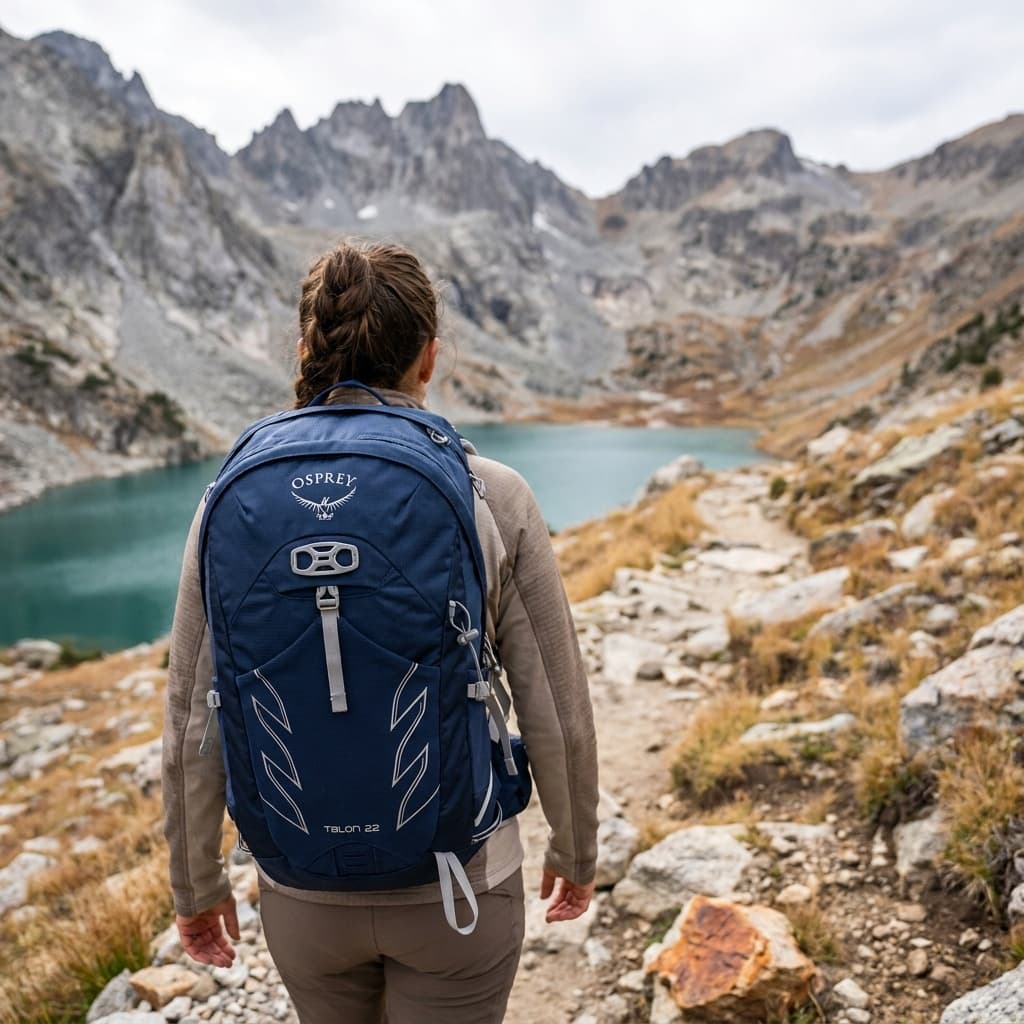
- Volume
- 22 L
- Weight
- 2 lb 1 oz (945 g)
- Back Panel
- AirScape foam with ventilation channels
- Hipbelt Pockets
- 2 zippered
- Hydration
- Compatible up to 3 L reservoir (sold separately)
- Warranty
- All Mighty Guarantee (lifetime repair or replace)
About this pick
The Talon 22 is the daypack you see on the trail more than any other for good reason: it packs in a padded hipbelt, adjustable torso harness, and dual hipbelt pockets into a 22-liter package that handles loads up to 20 lb without complaint. Owners across hundreds of Amazon ratings consistently cite its adjustability and durability as standouts.
Strengths
- Adjustable torso fit covers a wide range of body sizes
- Padded hipbelt and dual hipbelt pockets at this size are rare
- Osprey lifetime warranty backs years of hard use
Weaknesses
- At 2 lb 1 oz it runs heavier than ultralight rivals for the same volume
- AirScape back panel ventilation is functional but not class-leading compared to suspended-mesh designs
Kit Score breakdown
Gear for White Sands
The buying guides that match what White Sands asks of your kit. Each one has our current top picks across budget and use case.
Can you photograph here? Permit and drone rules
White Sands' permit page still reflects the pre-EXPLORE framework with a $100 application fee, and missile range closures can shut the whole park without much warning.
- Permit
- Usually fine for personal shoots; commercial or large productions can need a permit
- Drones
- Effectively banned: launching, landing, or operating a drone within park boundaries is prohibited
- Land
- Yes for personal and editorial photography during open hours
From our photography sister site, Aperture Authority. Verified 2026-07-01.
Frequently asked questions
Do you need a reservation to visit White Sands National Park?
No. White Sands does not use a timed-entry reservation system. You simply pay the entrance fee at the gate or with a digital pass, which costs $25 per vehicle and is valid for seven days. Just check the park's road status before you go, since it can close temporarily for missile range tests.
Can you sled down the dunes at White Sands?
Yes, sledding the gypsum dunes is one of the park's signature activities. You can buy or rent a waxed plastic saucer sled at the visitor center gift shop, and waxing the bottom helps it glide. Look for steeper, firmer dune faces away from the road for the best runs.
What is the best time of day to visit White Sands?
Late afternoon into sunset is the magic window. The low sun makes the white sand glow gold and pink, temperatures cool off, and the harsh midday glare fades. The park also runs ranger-led sunset strolls and monthly full-moon programs that are worth timing your trip around.
Why does White Sands National Park sometimes close?
The park sits inside the active White Sands Missile Range, and both the park and Highway 70 can close for an hour or two during missile tests, usually a couple of times a week. Closures are short and scheduled in advance, but they can disrupt your plans. Always check the park's road conditions page the day of your visit.
Keep planning
Compare with another park