Camping pillow options have expanded well past the choice between "bring a real pillow" and "scrunch up your jacket." Three distinct categories now exist, each with a real use case, and picking the wrong one costs you either sleep quality or pack space.
Weight and packed size: the real difference
The numbers here are not close. Inflatable camping pillows weigh 1.8 to 4.9 oz and pack down to roughly 2 to 3.5 inches across. Compressible foam pillows weigh 11.5 oz to over 2 lbs and compress to roughly 10 x 14 inches, according to Treeline Review's 2026 backpacking pillow guide. That 10 x 14 packed size is comparable to a stuff sack for a summer sleeping bag.
The HEST Pillow, one of the highest-rated foam options, scored 10/10 for comfort at OutdoorGearLab but weighs 32.8 oz and packs to 11.4 liters. For a weekend backpacker targeting a sub-10 lb kit, that is a significant line item for one night's neck support.
Hybrid pillows (an air bladder with a foam or down topper) land in the 9 to 9.3 oz range, with packed volumes well below foam. The NEMO Fillo hybrid packs to 1.4 liters at 9 oz. A pure inflatable like the Sea to Summit Aeros Premium packs to 0.4 liters at 3.1 oz. Foam sits at the far heavy-and-bulky end; inflatables sit at the far light-and-small end; hybrids sit genuinely between them.
Comfort and feel: what the categories actually deliver
Compressible foam pillows like the Therm-a-Rest Compressible Cinch feel closest to sleeping at home. They are soft, quiet, and require no inflation ritual at bedtime. The tradeoff is that bulk and weight.
Inflatables have a reputation for feeling firm and crinkly. That reputation is partly earned for cheap TPU-bladder models, but better designs encase the bladder in polyester taffeta or add a brushed fabric cover, which changes the surface feel meaningfully. Inflating to roughly 80 percent capacity rather than fully firm also improves softness by letting the head sink in slightly. That adjustability is something foam cannot offer at all: a slightly underinflated pillow gets you a softer feel; full inflation gets you firmer support for different sleep positions.
Hybrids close most of the comfort gap. The NEMO Fillo scored 9/10 for both comfort and support at OutdoorGearLab, with the foam topper absorbing the firm-bladder feel that some sleepers dislike.
Inflation adjustability is an underrated feature. A slightly under-inflated pillow lets the head sink in for a softer feel; full inflation firms things up for side sleeping. Foam gives no such option.
Loft and sleep position: the 4-inch threshold
Side sleeping puts the most demand on a camping pillow. The head needs to be supported high enough to keep the neck aligned with the spine, which means filling the gap between the head and the shoulder. Below roughly 4 inches of loft, most inflatables do not provide adequate cushion between head, neck, and shoulder for side sleepers, according to both Treeline Review and Switchback Travel's 2026 guides.
Most quality inflatables (the Sea to Summit Aeros Premium, ExPed Megapillow) land in the 3.9 to 4.7-inch loft range and handle side sleeping well. Ultralight models at 3 inches often fall short for side sleepers. Contoured or crescent-shaped designs that position under the neck add stability and reduce pillow migration during the night.
Stomach sleepers actually benefit from lower loft, around 3 to 4 inches, to avoid neck extension strain. Thin inflatables work better here than thick foam options.
Back sleepers sit in the middle and have the most flexibility across pillow types.
Match pillow type to your situation
Define your carry weight target
Ultralight backpackers targeting under 5 lb base weight point directly to inflatables at 2 to 5 oz. If total pack weight is not a constraint, expand the field.
Check your sleep position
Side sleepers need 4+ inches of loft, which most quality inflatables and all hybrids provide. Stomach sleepers want thinner profiles. Back sleepers have the most options.
Consider your trip type
Car camping or base camp trips absorb the weight and bulk of compressible foam with no real cost. Two-to-five-night backpacking trips are where the hybrid earns its keep.
Assess your comfort sensitivity
If pillow feel significantly affects your sleep quality, start with a hybrid before dismissing inflatables. Foam remains the most reliable choice for comfort-first campers with no weight concern.
Factor in packability vs. comfort tradeoff
The hybrid's 1.4 L packed volume versus foam's 10 x 14 inches is a real pack-organization advantage on trips where space is shared with a shelter or layering kit.
Durability: real but manageable differences
Inflatable pillows are vulnerable to puncture in ways foam is not. That said, a well-maintained inflatable can last a decade or more: at least one tester's model ran 10 years before puncture, and most inflatables come with a repair kit. The practical risk is lower than the conceptual risk, especially for sleepers who are not placing the pillow on rocky ground.
Compressible foam degrades differently, slowly losing loft over years of compression rather than failing suddenly. Hybrids wear well overall, and many models have machine-washable covers that extend their useful life.
The practical decision
The clearest split is between trip type and weight discipline. Ultralight backpackers belong in inflatables. Car campers and base camp setups belong in compressible foam. Everyone between those poles, especially side sleepers on trips of two to five nights, benefits most from a hybrid.
If you are ready to pick a specific model, see our guide to the best camping pillows for tested options across all three categories with weights, dimensions, and sleep-position ratings.
Are inflatable camping pillows actually comfortable, or do they always feel plasticky?
It depends on the model and how you inflate it. Bare-bladder inflatables can feel firm and crinkly, especially cheap TPU shells. Better designs encase the bladder in polyester taffeta or add a brushed fabric cover, which changes the feel significantly. Inflating to about 80 percent capacity rather than firm also improves softness. If the standard feel still bothers you, a hybrid pillow adds a thin foam or down topper and closes most of the comfort gap at roughly 9 oz.
Can inflatable camping pillows handle side sleeping?
Yes, if you pick the right loft. Side sleepers need to fill the gap between head and shoulder, which requires roughly 4 inches of loft or more. Most quality inflatables (Sea to Summit Aeros, ExPed Megapillow) land in the 3.9 to 4.7-inch range and work well. Ultralight models at 3 inches tend to under-support the neck for side sleepers. Contoured or crescent-shaped designs that sit under the neck add stability and reduce pillow migration during the night.
How do I choose between a compressible foam pillow and a hybrid for a weekend backpacking trip?
Weight and pack space are the deciding factors. A compressible foam pillow at 11 to 16 oz and 10 x 14 inches packed is a real cost for a weekend carry. A hybrid at 9 oz and roughly half the packed volume gives you similar softness without the penalty. If you are already camping with a heavy or bulky sleep system and a few extra ounces do not matter, foam is perfectly fine. If you are watching total base weight or have limited pack space, the hybrid is the more useful tool for that use case.
Browse more camp gear reviews and picks, or read about how we research and rate the products we cover.
Recommended gear
Our current top picks from the Best camping pillows in 2026: inflatable, foam, and hybrid picks guide, if you are ready to buy.
NEMO EQUIPMENT
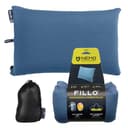
NEMO Fillo Backpacking and Camping Pillow
Best Overall
Kit Score 8.5/10
$49.95 Price checked Oct 23, 4:16 PM CDT
Best for: Car campers and occasional backpackers who want the closest-to-home sleep feel in a packable form.
- Top-tier comfort for the price: foam plus air combination works for back and side sleepers without the crinkle or rigidity of bare inflatables
- At 9.2 oz it is meaningfully heavier than pure inflatable rivals, which limits appeal for ultralight backpackers counting grams
- Type
- Hybrid: inflatable air bladder with foam padding
- Weight
- 9.2 oz (260 g)
- Packed size
- 6 x 4 in (1.4 L)
- Inflated dimensions
- 17 x 11 x 4 in
- Loft
- 4 in
- Cover
- Machine-washable polyester jersey
About this pick
The Fillo pairs an I-beam-baffled air cell with a foam topper, removing the balloon-like firmness of pure inflatables while keeping packed size reasonable. A machine-washable jersey cover and micro-adjusting valve round out a design that earns best-overall rankings across multiple independent review panels.
Strengths
- Top-tier comfort for the price: foam plus air combination works for back and side sleepers without the crinkle or rigidity of bare inflatables
- Machine-washable jersey cover stays soft and cool against the face across multi-night trips
- Twist valve allows easy firmness tuning from plush to firm in seconds
Weaknesses
- At 9.2 oz it is meaningfully heavier than pure inflatable rivals, which limits appeal for ultralight backpackers counting grams
- Integrated stuff sack is tight and the twist-pull valve can be fiddly when packing in the dark
Kit Score breakdown
SEA TO SUMMIT
Sea to Summit Aeros Premium Inflatable Pillow
Editor's Choice
Kit Score 8.3/10
$38.46 Price checked Oct 23, 4:16 PM CDT
Best for: Backpackers and thru-hikers who need every gram counted but still want a pillow that does not feel like a balloon against the face.
- Exceptional weight-to-comfort ratio: 2.8 oz and lime-sized packed volume with a cover that feels soft rather than plasticky
- Smaller sleeping surface than compressible or hybrid rivals may cause the pillow to shift under the head for active sleepers
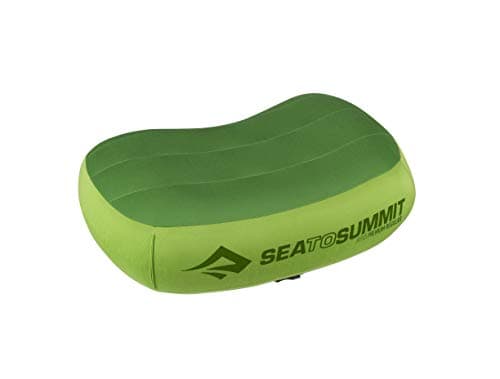
- Type
- Inflatable with brushed knit fabric cover
- Weight
- 3.5 oz (99 g) regular; 3.7 oz (104 g) packed
- Packed size
- 4 x 3 x 3 in (11 x 8 x 8 cm)
- Inflated dimensions
- 13 x 9 x 4 in (34 x 24 x 11 cm), loft adjustable up to 12 cm
- Sizes available
- Regular, Large, Deluxe
- Valve
- Mini XPRESS valve
About this pick
The Aeros Premium is a lightweight inflatable with a contoured crescent shape and soft brushed-knit cover that puts it noticeably ahead of bare-TPU budget inflatables in surface feel. At 2.8 oz and 0.6 L packed for the Regular, it is the backpacker's pick when weight budget is tight but all-night comfort still matters.
Strengths
- Exceptional weight-to-comfort ratio: 2.8 oz and lime-sized packed volume with a cover that feels soft rather than plasticky
- Crescent ergonomic shape cradles the neck for side sleepers and adjusts in seconds via the multi-function mini valve
- Long-term owner loyalty stands out, with multiple reviewers citing 10-plus years of durable seasonal use
Weaknesses
- Smaller sleeping surface than compressible or hybrid rivals may cause the pillow to shift under the head for active sleepers
- Pure-inflatable construction is firmer than foam options, which some sleepers find uncomfortable on hard ground
Kit Score breakdown

THERM-A-REST
Therm-a-Rest Compressible Cinch Camping Pillow
Best Value
Kit Score 8.2/10
$39.95 Price checked Oct 23, 4:16 PM CDT
Best for: Car campers and weekend trip car-to-tent campers who want the most home-like softness and adjustable firmness at an approachable price.
- Closest to home-pillow feel: foam construction cradles the head and does not press hard against the ear for side sleepers the way inflatable rivals can
- Heaviest and bulkiest option in this group: 8.6 oz and 2.6 L packed makes it a tough choice for backpackers watching base weight

- Type
- Compressible upcycled foam with cinch adjustment
- Weight
- 11.5 oz regular (325 g); small 8 oz, large 16 oz
- Packed size
- Not published by Therm-a-Rest (compresses into itself)
- Expanded dimensions
- 18 x 13 x 6 in (regular)
- Cover
- 60% recycled polyester with built-in stuff sack
- Sizes available
- Small (15 x 11 x 5 in), Regular (18 x 13 x 6 in), Large (22 x 15 x 7 in)
About this pick
The Compressible Cinch fills with upcycled foam scraps and adds a drawcord you tighten or loosen to dial in firmness, delivering genuine home-pillow softness at a price well below comparable camping options. It earns best-buy recognition across multiple independent testing panels for this comfort-to-cost ratio.
Strengths
- Closest to home-pillow feel: foam construction cradles the head and does not press hard against the ear for side sleepers the way inflatable rivals can
- Cinch cord lets you tune from soft and flat to lofted and firm without adding or releasing air
- Strong cost-to-comfort ratio at around $35 – $40 list makes it the clearest recommendation for car campers on a moderate budget
Weaknesses
- Heaviest and bulkiest option in this group: 8.6 oz and 2.6 L packed makes it a tough choice for backpackers watching base weight
- Internal foam fragments can shift during the night, creating minor lumps that some sleepers notice
Kit Score breakdown
See all picks in Best camping pillows in 2026: inflatable, foam, and hybrid picks
Keep going
Related guides


 Complete camp loadoutCamp kitchen kitBuild the complete kit
Researched, not hands-on tested
Updated Jun 4, 2026Our recommendations draw on manufacturer documentation, retailer listings, owner feedback, and comparisons with alternatives.
As an Amazon Associate I earn from qualifying purchases. We may earn a commission from links here, at no extra cost to you. How we research →