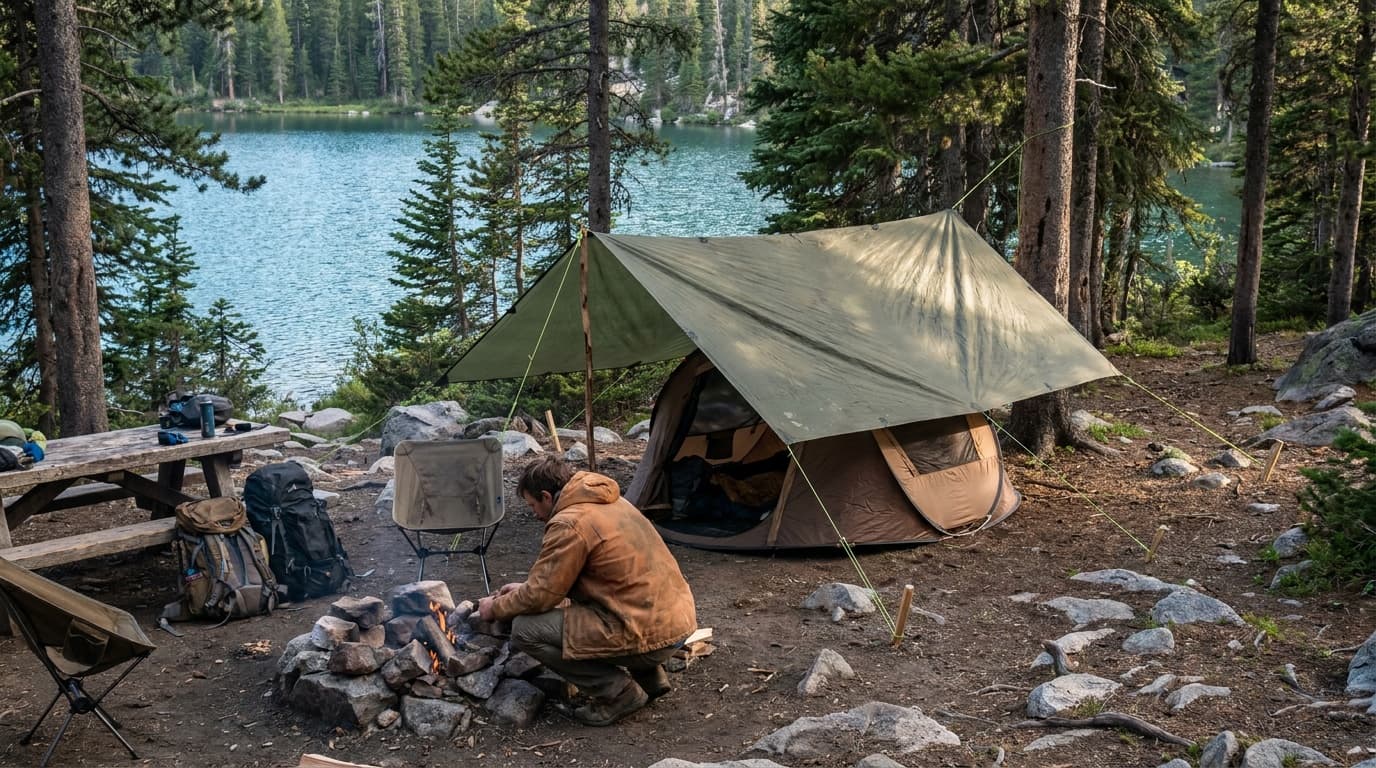
A pop-up canopy looks simple until you're standing in a parking lot with a bent leg and a leaking roof, wishing you'd read the specs before you clicked Buy. Here's how to decode what actually matters.
Size: why 10x10 is the baseline
The 10x10 ft footprint is the default for good reason. It covers roughly 100 sq ft of shade, fits a standard 8 ft folding table with chairs around it, and matches the booth size at most farmers markets and craft fairs. If you need more room, a 10x20 runs two 8 ft tables end-to-end and suits longer tailgate setups or large family campsites, but it weighs significantly more and requires two people to set up safely.
For backyard use or a single-family picnic, a 10x10 is almost always enough. For a vendor booth at an outdoor market, confirm the event's allotted space before going bigger.
Frame gauge and material: the wind equation
The frame is where cheap canopies fail. Leg diameter and wall thickness determine whether your shelter stays upright in a gust or becomes a sail. Most budget canopies use thin-wall tubing in the 1 in (25 mm) range. That is fine for calm backyard birthday parties. For anything exposed, such as a beach, a parking lot, or an open field, you want legs rated at 1.25 in (32 mm) or larger.
Steel is heavier but stiffer. Powder-coated steel legs in the 1.25 in range, like those on the Eurmax USA 10x10 Pop Up Canopy, give you the best rigidity for the price. Aluminum is lighter and rust-resistant, which matters if you store the canopy wet, but aluminum at the same diameter flexes more than steel. High-grade aluminum (often called "commercial grade") compensates with thicker walls.
Check the truss connectors, not just the legs. Plastic connector joints at the top corners are the first failure point in wind. Look for steel or reinforced nylon joints rated for the leg gauge you chose.
A canopy that blows over injures people and destroys property. Frame gauge and anchor system are safety decisions, not upgrade options.
Canopy fabric: denier, UPF, and waterproof ratings decoded
The roof fabric is described in three numbers that are easy to skip over.
Denier (D) measures yarn thickness. Higher denier means a heavier, more abrasion-resistant fabric. Budget canopies use 150D polyester. Mid-range and commercial canopies move to 300D or 600D. For occasional use, 150D is workable. For weekly market or tailgate use, 300D pays for itself in longevity.
UPF rating tells you how much ultraviolet radiation the fabric blocks. UPF 50+ blocks 98% of UV-B rays. This is the minimum to look for if shade is the primary goal, not just rain cover. Many cheap canopies skip a published UPF rating; treat an unlisted UPF as poor.
Waterproof rating is measured in millimeters (mm) of hydrostatic head. A 1000 mm rating handles steady moderate rain. A 2000 mm rating handles heavier rain and pooling from a sag in the roof. The coating degrades over time; reapply a DWR spray each season.
Read the fabric spec label
Denier
Higher number = thicker yarn = more durable; 150D for light use, 300D+ for regular use
UPF rating
Look for UPF 50+ for real UV protection; unlisted means untested
Waterproof (mm)
1000 mm handles moderate rain; 2000 mm for heavier weather or pooling risk
Coating type
Silver or white undercoating reflects heat and improves UV blocking beyond base denier
Setup mechanism: one-push vs scissor
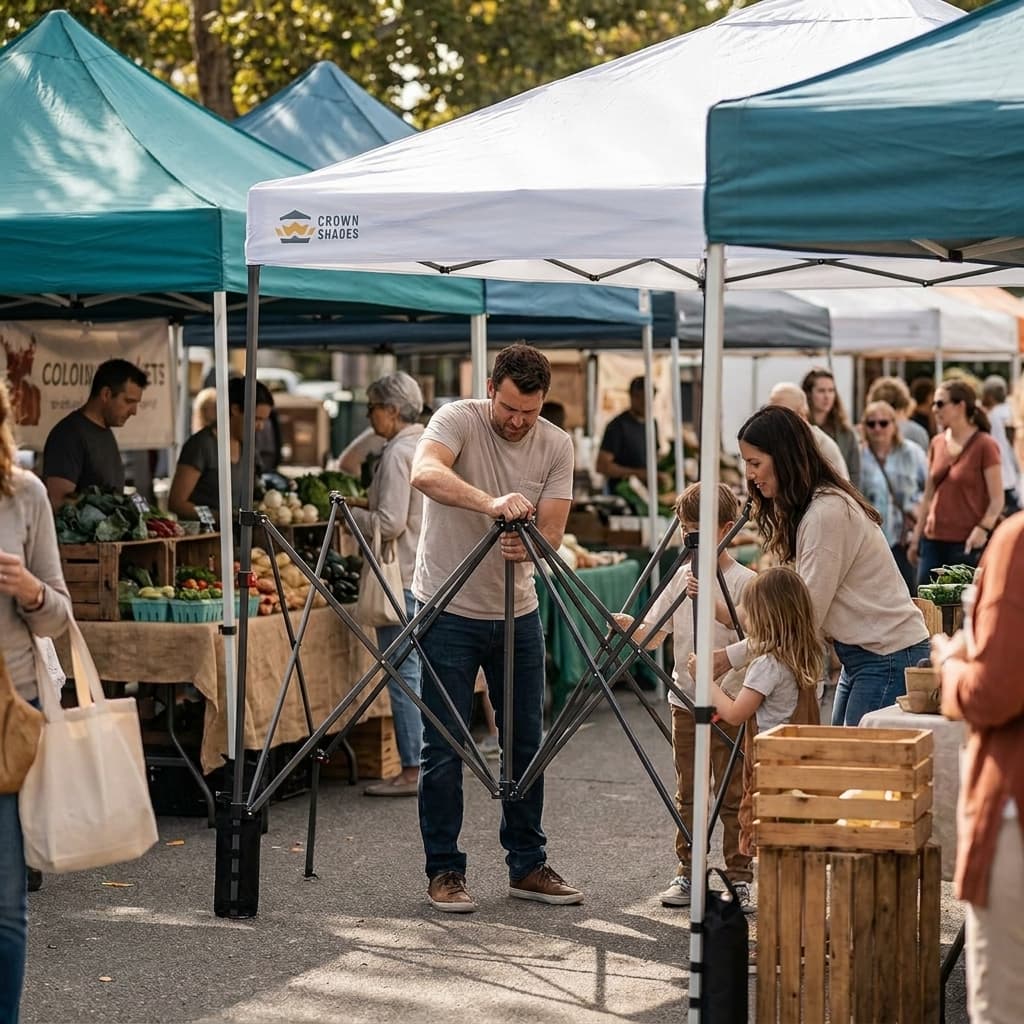
Most pop-up canopies use a scissors-truss (hub-and-rail) system. You accordion-extend the frame, then push the top hub up to lock. One-push systems add a central push-button or pull-pin mechanism that extends the frame in a single motion. Both work. The difference is speed and price: one-push adds $30–$80 to the cost and shaves 3–5 minutes off setup, which matters if you're setting up at 6 am for a market or in a sudden rainstorm.
For two-person setup, a standard scissor frame is fine and more repairable in the field. For solo setup, a one-push mechanism like the Crown Shades 10x10 CenterLok is worth the premium because extending a 10x10 frame alone while keeping it square is frustrating without it.
Weight, bag, and carry system
A 10x10 steel-frame canopy typically weighs 35–55 lbs with the bag. Aluminum at the same size runs 20–35 lbs. That gap matters the moment you're walking it from a parking lot 200 yards to a field.
Look for a wheeled carry bag (the CORE 10x10 Instant Pop Up Canopy ships with one). A rolling bag with a telescoping handle is not a luxury on a 45 lb canopy; it is the difference between a solo haul and needing a second person just for transport. Many canopies are sold with a shoulder carry bag only. Check the bag spec before buying.
Sidewalls, anchor kits, and what should ship in the box
Sidewalls extend the canopy into a three-sided or four-sided shelter for wind, rain, or privacy. Most mid-range canopies sell sidewalls as add-ons. If you plan to use the canopy in variable weather, check that the sidewall attachment system on your canopy is compatible before you buy.
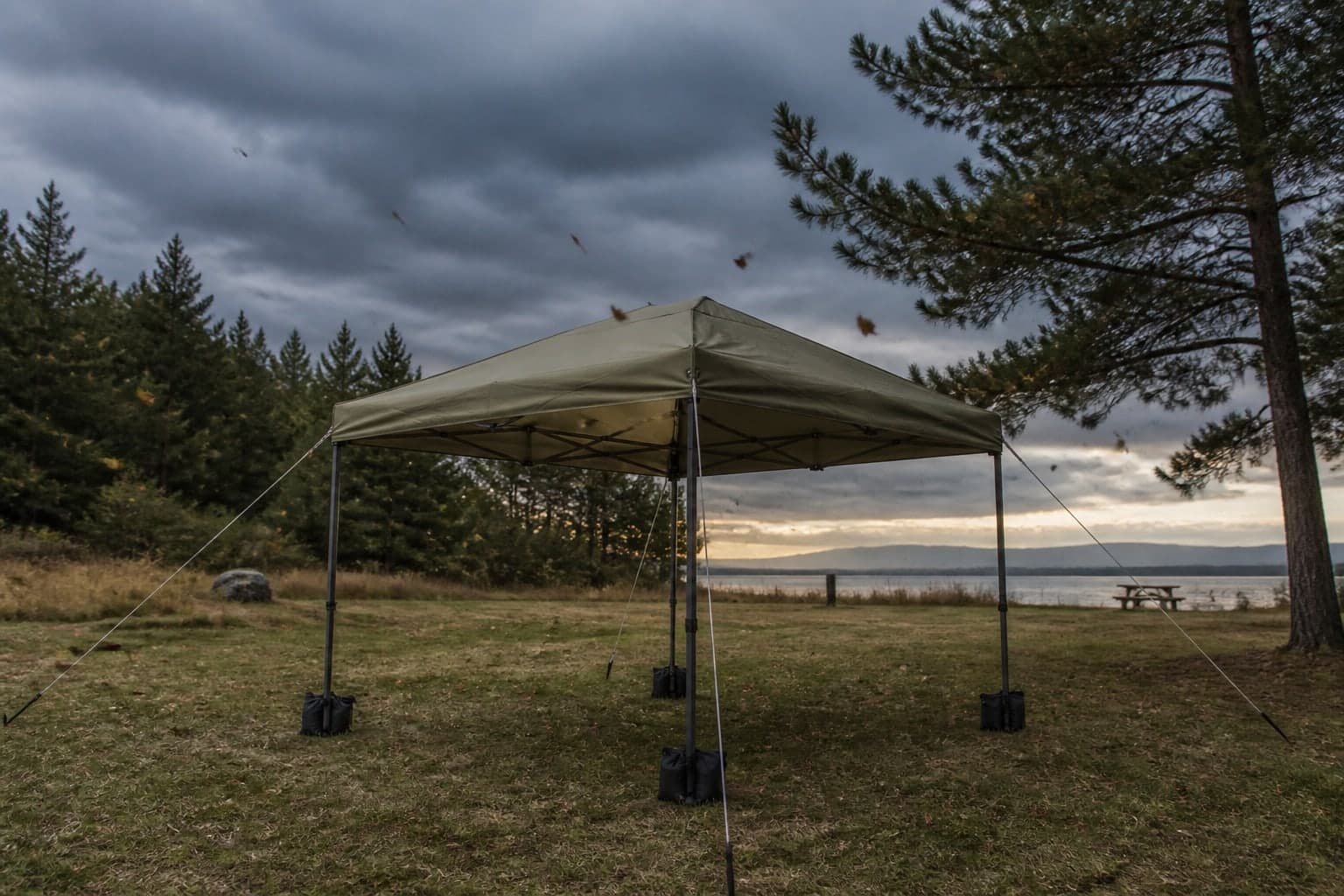
An anchor kit is non-negotiable. Canopies that become airborne cause serious injuries. The standard kit includes four steel ground stakes and two sandbags per leg. For hard surfaces like concrete or asphalt (tailgating, market lots), you need weight bags only. For soft ground (grass, dirt), stakes plus bungee guy lines are the minimum. Weight the legs even when staked. A stake alone in soft or dry ground can pull out in a gust.
Match your anchor approach to the surface. Check local event rules; many markets and festivals require sandbag anchoring even with grass underfoot.
Frequently asked questions
What wind speed can a 10x10 pop-up canopy handle?
Most consumer-grade pop-up canopies are rated for 15–25 mph winds when properly anchored. Commercial-grade frames with wider-gauge legs and full leg weighting can handle gusts up to 35 mph. If a weather forecast shows sustained winds above 20 mph or gusts above 30 mph, take the canopy down. No anchor system makes a large fabric structure safe in high wind.
Is a higher denier canopy always better?
Higher denier fabric is more durable and puncture-resistant, but it also adds weight and cost. For a canopy you set up once a month on calm days, 150D is sufficient. For a canopy used weekly at outdoor markets, exposed to rain and sun repeatedly, 300D or 600D pays off over two to three seasons of extended life. Match denier to frequency of use, not just price tier.
Can I leave a pop-up canopy up overnight?
Not recommended, even in calm conditions. Pop-up canopies are designed for day use. Overnight conditions bring dew, condensation, and unexpected wind shifts that stress joints and fabric continuously. If you need overnight shade structure at a campsite, a screen house or purpose-built tent shelter with guyed anchoring is a safer choice. If you must leave a canopy up, fully weight all four legs and stake all four corners, and remove it if any wind advisory is issued.
For specific picks across budget, mid-range, and commercial tiers, see our guide to the best pop-up canopies. Browse all camp guides or read how we research and rate gear.
Recommended gear
Our current top picks from the Best pop-up canopies for camping, tailgating, and markets guide, if you are ready to buy.
Best for: Farmers-market vendors, craft-fair regulars, and tailgaters who set up and tear down every week and need a shelter that keeps performing season after season.
- Steel frame delivers strong wind and load resistance at this price tier
- At roughly 51 lbs and a packed length of 64 inches, it is difficult to lift solo from a truck bed or fit in a compact car
- Frame
- Powder-coated alloy steel
- Canopy fabric
- 500D PU-coated polyester, UV-resistant (approx. 99% UV blocked), fire-rated
- Weight
- 53.9 lb (Amazon listing)
- Peak height
- 10.4 ft to 11 ft (3 leg settings, per listing)
- UV protection
- Blocks approx. 99% UV
- Carry bag
- Patented L-shaped roller bag, 2.7-inch all-terrain wheels, 1680D polyester shell
About this pick
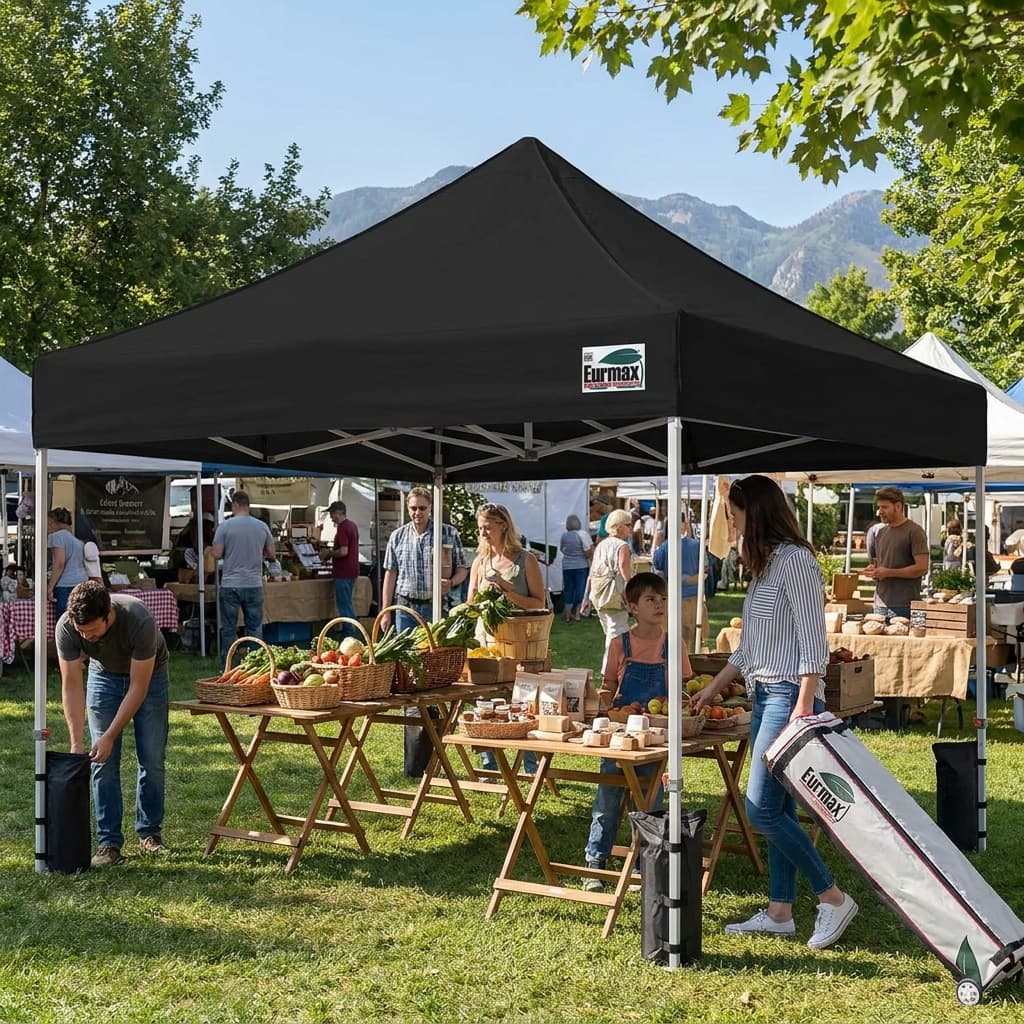
The Eurmax USA 10x10 is a commercial-grade shelter built around a powder-coated steel frame and 500-denier PU-coated polyester, earning top marks in independent testing for its combination of weather protection, structural rigidity, and a genuinely excellent roller bag. It weighs more than most recreational options but rewards that trade-off with a peak height up to 11 feet, strong wind resistance when staked, and a reputation for lasting through seasons of heavy use.
Strengths
- Steel frame delivers strong wind and load resistance at this price tier
- Peak height up to 11 feet gives genuine walk-around clearance at all three leg settings
- Roller bag is outstanding: corrosion-resistant plate, full-length zipper, interior pocket, and 2.7-inch wheels that roll on gravel and grass
Weaknesses
- At roughly 51 lbs and a packed length of 64 inches, it is difficult to lift solo from a truck bed or fit in a compact car
- Stakes are not included; the sandbag anchors supplied work on pavement but stakes are needed for soft ground
Kit Score breakdown
Best for: Buyers who want a proven, well-supplied 10x10 shelter for weekend markets, youth sports, or casual outdoor events and need a complete kit without sourcing sandbags separately.
- Over 8,400 Amazon ratings at 4.2 stars reflects a broad, verified ownership base, not a thin review set
- 150D polyester fabric is lighter than the 300D material used on MASTERCANOPY commercial-grade models, so extended heavy-rain or high-UV use will degrade the canopy top faster
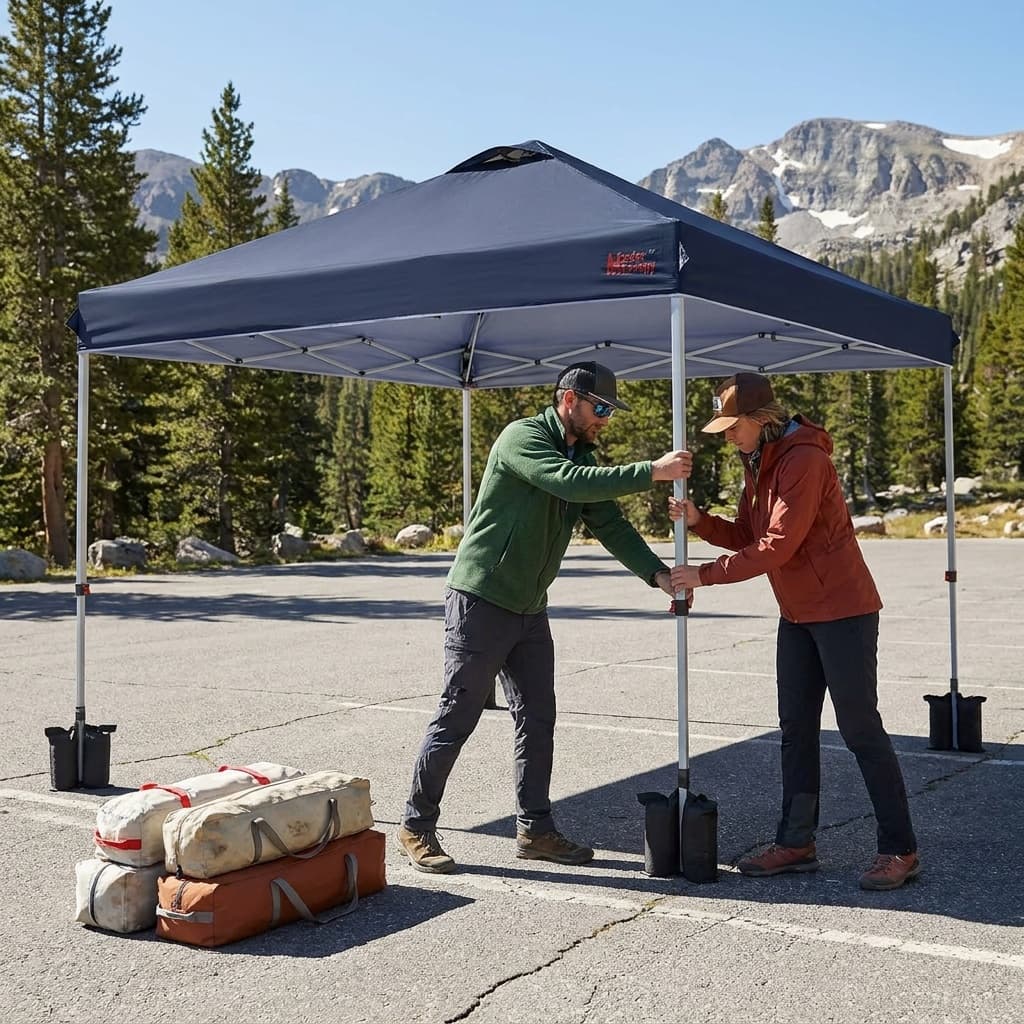
- Coverage
- 10 x 10 ft (100 sq ft)
- Frame
- Corrosion-resistant steel, 1.2mm thick poles (30% thicker than standard)
- Canopy fabric
- 150D silver-coated polyester, UPF 50+, water-resistant
- Weight
- 37 lbs
- Packed size
- 49 x 9 x 8 in (roller bag)
- Includes
- 4 sandbags (20 lbs capacity each), 8 galvanized stakes, 4 wind ropes, wheeled roller bag
About this pick
The MASTERCANOPY Durable series is one of the most-reviewed 10x10 pop-up canopies on Amazon, carrying over 8,400 ratings and ranking consistently in the top 5 of the outdoor canopy category. The frame uses 1.2mm thick steel poles, which MASTERCANOPY notes is 30% thicker than standard budget frames, and the design allows a solo setup in under a minute: pull the assembled frame from the roller bag, push open, lay the canopy top over, and extend the legs to one of three height settings. The package is notably complete for the price bracket: four 20-lb sandbags, eight galvanized stakes, four wind ropes, and a wheeled carry bag all ship in the box. The 150D silver-coated polyester provides UPF 50+ protection and sheds light rain. At 37 lbs it fits in most car trunks and can be carried by one person, making it a practical pick for farmers markets, youth sports sidelines, beach days, and casual backyard gatherings.
Strengths
- Over 8,400 Amazon ratings at 4.2 stars reflects a broad, verified ownership base, not a thin review set
- Complete kit out of the box: roller bag, four sandbags, eight stakes, and wind ropes included at no extra cost
- 1.2mm thick steel poles and three adjustable height positions give the frame more substance than entry-level competitors at this price point
Weaknesses
- 150D polyester fabric is lighter than the 300D material used on MASTERCANOPY commercial-grade models, so extended heavy-rain or high-UV use will degrade the canopy top faster
- Frame weight and size require a roller bag rather than a backpack-style carry, which can be awkward on soft ground or stairs
Kit Score breakdown
CROWN SHADES
Crown Shades 10x10 CenterLok Pop Up Canopy
BEST BUDGET
Kit Score 8.0/10
$149.99 Price checked Oct 23, 6:22 AM CDT
Best for: Occasional-use campers, tailgaters, and anyone setting up once or twice a season who wants a fast, lightweight shelter without spending over $150.
- Patented CenterLok hub locks all corners in one push, making solo setup realistic in under five minutes
- Carry bag zipper failures appear frequently in owner reviews, especially after repeated pack-unpack cycles
- Frame
- Corrosion-resistant alloy steel, 1-inch legs, pre-assembled
- Canopy fabric
- 150D silver-coated polyester, UPF 50+, water-resistant, CPAI-84 flame-rated
- Weight
- 36 lbs
- Peak height
- 9 ft (3 settings: 104 / 108 / 112 in center height)
- Stability aids
- Drain grommets, integrated wheel footpads, 8 stakes and 4 guy ropes included
- Carry bag
- Sto-N-Go bag with built-in wheels on leg footpads; collapses with top attached
About this pick
Crown Shades built the CenterLok around a patented single-push center hub that locks all four corners simultaneously, making it one of the genuinely easiest-to-deploy 10x10 canopies available. The 150D silver-coated polyester delivers UPF 50+ protection, drain grommets prevent pooling, and the Sto-N-Go storage system collapses with the fabric attached so teardown does not require removing the canopy top separately.
Strengths
- Patented CenterLok hub locks all corners in one push, making solo setup realistic in under five minutes
- At 36 lbs it is one of the lightest steel-frame 10x10 options, and the leg-integrated wheels reduce handling effort
- Drain grommets and silver-coated interior are thoughtful details that reduce pooling and reflect heat
Weaknesses
- Carry bag zipper failures appear frequently in owner reviews, especially after repeated pack-unpack cycles
- Peak height tops out at 9 ft with roughly 6 ft 2 in of standing clearance, which is limiting for taller users or display signage
Kit Score breakdown
See all picks in Best pop-up canopies for camping, tailgating, and markets
Keep going
Related guides
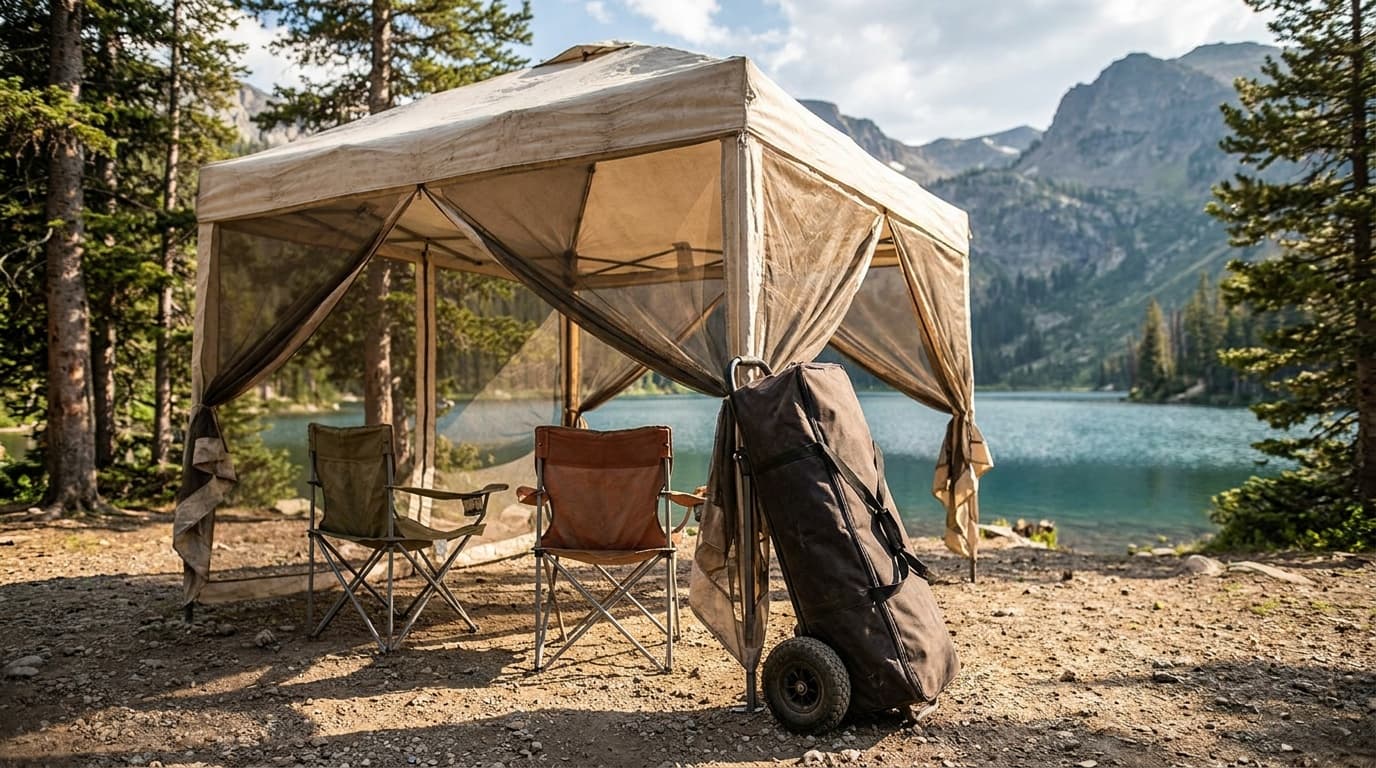
 Complete camp loadoutCar-camping starter kitBuild the complete kit
Researched, not hands-on tested
Updated Jun 4, 2026Our recommendations draw on manufacturer documentation, retailer listings, owner feedback, and comparisons with alternatives.
As an Amazon Associate I earn from qualifying purchases. We may earn a commission from links here, at no extra cost to you. How we research →