
Choose a camping cot by three numbers: sleep width, weight, and weight capacity. Side sleepers should look past the 26 to 27.5 inch decks of packable cots toward wide or XL models; anyone carrying the cot should stay under about 5 lb (the Kelty Lowdown is 4 lb 12 oz); and most cots are rated around 300 lb, with heavy-duty models up to 600 lb. A cot adds little insulation, so pair it with a sleeping pad on cool nights.
The numbers that matter before you shop
Packable vs car-camping cots
The first question to settle is how far you carry the cot. If the answer is more than a few hundred yards, weight and packed size become your primary filters. Ultralight cots exist, but that portability requires a narrower deck and more assembly. The Helinox Cot One Convertible packs to 21 inches and weighs 4 lb 14.5 oz packed; the Kelty Lowdown is slightly lighter and wider for much less.
For drive-up camping, ignore weight entirely and prioritize sleep width, height, and comfort. Car-camping cots in X-frame folding designs are much heavier (OutdoorGearLab weighed the Teton Outfitter XXL at 23.7 lb), which is irrelevant when you carry them from the trunk to the site.
Width: the most overlooked spec
Many camping cots are only 25 to 27 inches wide. That is narrow. Adult shoulder breadth runs roughly 14 to 20 inches across the middle 90 percent of US adults, and on your side your bent knees and elbows need room too, so a narrow deck leaves little margin before a hip or knee catches the frame bar. If you sleep on your side or move around at night, a wide or XL model is worth the extra bulk.
Width is the spec most buyers ignore and most regret. A narrow cot suits a still back sleeper; a side sleeper feels the frame bars all night.
The good news is that several brands, including Teton, sell XL and XXL versions of their standard cots. If you share a tent with a partner and you both bring cots, width also determines whether two standard cots fit side by side.
Height: about the tent as much as comfort
Cot height runs from about 6.5 inches off the ground for low-profile designs to well over a foot for full-size X-frame models.
Low-profile cots like the Kelty Lowdown Cot at 6.7 inches keep your body beneath sloping tent walls and reduce the distance of a fall. The tradeoff is that getting up from low to standing is harder on knees and hips, which matters more as the nights pile up.
Standard-height cots make getting in and out much easier, and the space underneath is genuinely useful: duffel bags, footwear, and wet gear fit under a full-height cot without taking up additional floor space.
Match cot height to your setup
Low tent or bivy
Choose a cot 6 to 8 inches off the ground. It fits under a taut fly without lifting the fabric and keeps your sleeping position stable.
Cabin tent or large basecamp shelter
Standard height is comfortable and the under-cot storage is worth having on trips of three or more nights.
Hip or knee issues
Standard height makes a real difference for getting up at night. Do not underestimate this if you camp multiple nights in a row.
Weight capacity
Most single-occupant cots are rated around 300 lbs (Kelty's Lowdown at 300, Helinox's Cot One at 320). Heavy-duty models step up from there: the Teton Sports Outfitter XXL, for example, is rated at 600 lbs.
The issue with running close to a cot's stated limit is not sudden failure. It is gradual frame flex that lets the center sag toward the ground, which creates a hammock effect that interrupts sleep and puts your hips below your shoulders. If you are near the roughly 300 lb rating of a standard cot, move up to a heavy-duty model. The sag matters before the limit does.
When a cot beats a sleeping pad
A cot earns its carry weight in a few situations: drive-up car camping where comfort matters, ground that is wet, rocky, or sloped, and for anyone with hip, lower-back, or knee issues who struggles to rise from floor level. The air gap underneath also improves ventilation on warm nights and eliminates the pressure from rocks and roots that no sleeping pad fully defeats.
A sleeping pad wins any time you carry your sleep system, any time cold is a factor, and any time packed size is a constraint.
Cot vs sleeping pad: which one wins
Car camping on uneven or wet ground
Cot wins. The air gap solves drainage, ground cold, and pressure points in one move.
Shoulder-season or cold nights
Sleeping pad wins, or use both: lay a pad on top of the cot. A cot adds little or no insulation and cold air circulates freely underneath.
Backpacking, canoe tripping, bike touring
Pad wins on weight and packed size every time. Even the lightest cots cannot match a modern foam or inflatable pad.
Back or hip pain
Cot wins for getting up, but lay a sleeping pad on top for surface cushion. The cot fabric alone is not soft.
Hot summer camping
Cot wins. The air gap underneath improves airflow and prevents the sweaty contact that builds on ground-level pads.
Setup speed and packed dimensions
Fold-open X-frame cots are the fastest to set up. Lever-locking designs and pole-and-hub packable cots like the Helinox take longer and more hand strength. That gap feels larger at a late-night arrival in the dark than it does in a parking lot demo.
Packed dimensions also matter for vehicle configurations. Full-size car-camping cots fold to long, bulky packages that may compete for space in a packed SUV cargo area, while packable cots like the Helinox pack to about 21 inches. Check packed length alongside packed weight before you buy.
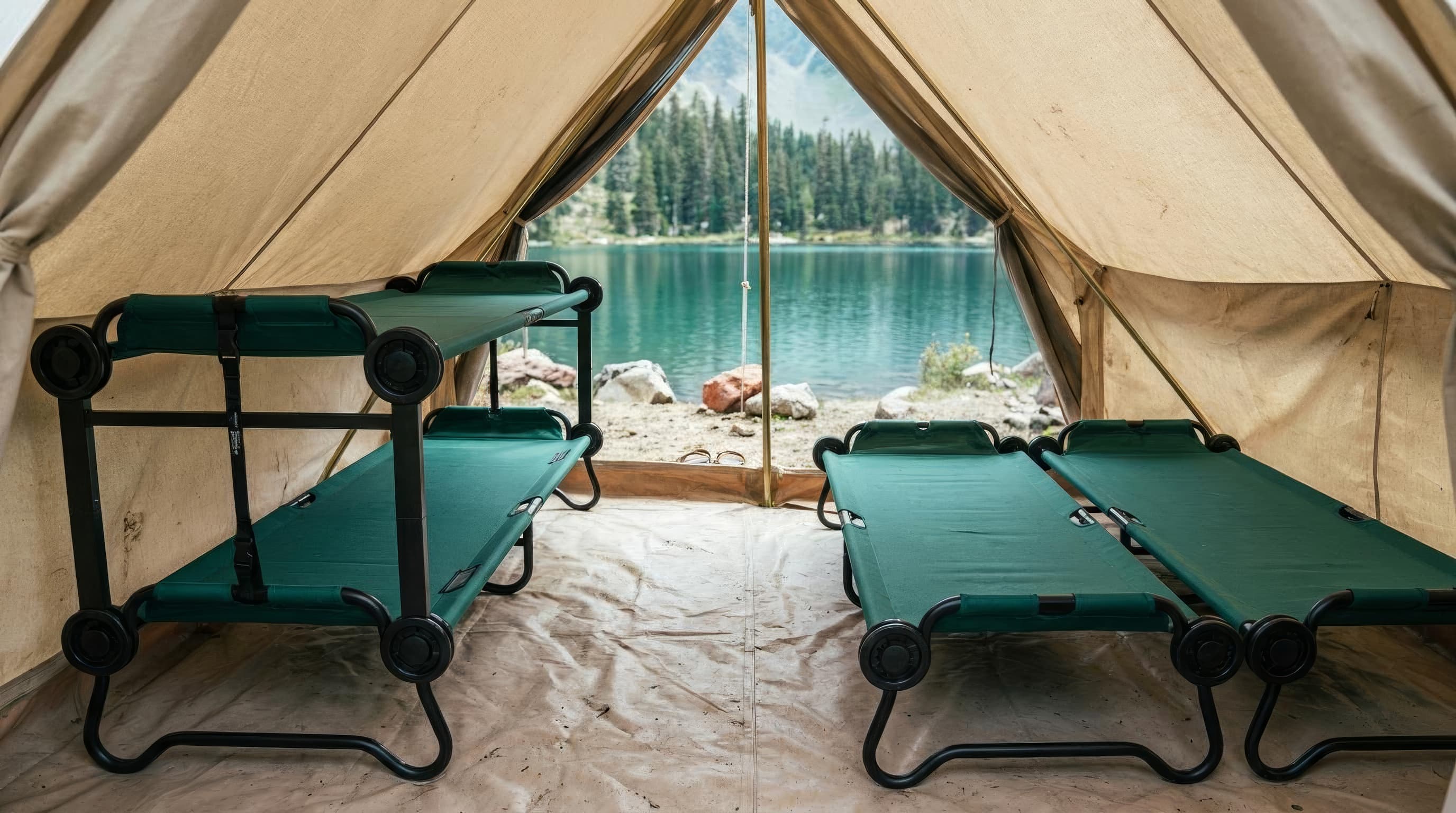
Shared tents add a different question: floor area. The Disc-O-Bed Large Bunk stacks two 79 by 28-inch sleep decks inside an 82 by 32.5-inch footprint, but its 60 lb system weight and 36-inch assembled height require vehicle support and a tall shelter. Compare that geometry with two separate cots before treating a bunk as an automatic space saver.
FAQ
What width camping cot do I need as a side sleeper?
Wider than the narrowest models. Many cots are 25 to 27 inches wide (the packable Helinox Cot One is 26, the Kelty Lowdown 27.5), which is tight for side sleeping once knees and elbows come forward. Adult shoulders alone run roughly 14 to 20 inches. If you sleep on your side or move around, look at wide, XL, or XXL versions.
Will a camping cot keep me warm, or do I need a sleeping pad too?
A cot alone will not insulate you much. The air gap underneath lets cold air circulate freely, and REI notes cots may lack insulation. On cool nights, lay a sleeping pad on top. REI rates R-2 to 3.9 pads for cool weather, and summer pads are fine for most three-season use. A higher-rated pad or a sleeping bag rated for the expected low temperature handles the rest.
When does a cot make more sense than a sleeping pad?
A cot earns its weight at a drive-up site when you want real sleep comfort, when the ground is wet, rocky, or sloped, or when back, hip, or knee issues make getting up from the floor difficult. It also creates useful under-bed storage. A sleeping pad wins any time you carry your gear (backpacking, canoe camping, bike touring) or when you are camping in cold conditions and need insulation from the ground.
Where these numbers come from
| Claim | Source | Checked |
|---|---|---|
| Helinox Cot One Convertible: 21 in packed, 4 lb 14.5 oz packed, 26 in wide, 6.5 in high, 320 lb | Helinox, Cot One Convertible | Sep 2026 |
| Kelty Lowdown: 4 lb 12 oz, 27.5 in wide, 6.7 in high, 300 lb | Kelty, Lowdown Cot | Sep 2026 |
| Teton Outfitter XXL rated 600 lb | Teton Gear, camp cot with pivot arm | Sep 2026 |
| Most tested cots rated about 300 lb; Teton XXL weighed 23.7 lb | OutdoorGearLab, best camping cot | Sep 2026 |
| Disc-O-Bed Large: two 79 x 28 in decks, 82 x 32.5 x 36 in, 60 lb | Disc-O-Bed, bunks | Sep 2026 |
| Pads R-2 to 3.9 for cool weather; cots may lack insulation | REI, how to choose a sleeping pad | Sep 2026 |
| Adult shoulder (bideltoid) breadth, 5th to 95th percentile: about 360 to 515 mm | CityU Online Anthropometry, shoulder breadth | Sep 2026 |
Weights, widths, and capacities are the makers' published specs unless noted as a reviewer's measurement.
For recommendations by budget and style, see our guide to the best camping cots. Browse more camp gear, or read how we research and rate.
Recommended gear
Our current top picks from the Best camping cots 2026: 5 picks for every camp guide, if you are ready to buy.
HELINOX
Helinox Cot One Convertible
Best Overall
Kit Score 8.6/10
$399.95 Price checked Oct 23, 6:22 AM CDT
Best for: Campers who prioritize packability and sleep quality above all else, and will use the cot hard enough to justify the investment.
- Best-in-class packed size for a full-length cot: 21" x 6" x 5.5" fits inside most duffels
- Premium price is a real barrier: costs 2–4x comparable steel-frame cots
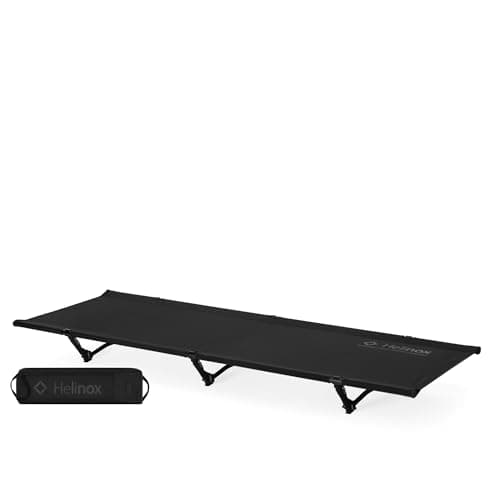
- Sleeping surface
- 75" x 26" (Regular)
- Packed size
- 21" x 6" x 5.5"
- Weight
- 4 lb 14.5 oz packed (4 lb 9.5 oz cot only)
- Weight capacity
- 320 lbs
- Height
- 6.5" standard (raising legs sold separately)
- Frame
- DAC TH72M aluminum; recycled 300D polyester
About this pick
The Cot One Convertible earns its reputation through a precision-engineered lever-locking frame that eliminates sag, packs to a 21 x 6 x 5.5 inch cylinder, and sets up in a few minutes once you have practiced. The DAC aluminum alloy poles are the same material used in premium tent frames: light, stiff, and built to last far longer than steel competitors at this weight.
Strengths
- Best-in-class packed size for a full-length cot: 21" x 6" x 5.5" fits inside most duffels
- Non-stretch fabric combined with the tensioner system delivers a genuinely flat, supportive sleep surface with no hammock sag
- Optional leg set (sold separately) raises the low-profile cot without buying a new product
Weaknesses
- Premium price is a real barrier: costs 2–4x comparable steel-frame cots
- 26" wide sleeping surface is tighter than heavy-duty car-camping cots; side sleepers over 200 lbs may want the Max model
Kit Score breakdown
Best for: Campers who want a genuinely packable lightweight cot without crossing into premium territory, especially side sleepers who need more than the standard 25-inch width.
- Packed footprint is among the smallest of any steel-free cot at this price point
- 75" length is a tight fit for sleepers taller than 6 feet
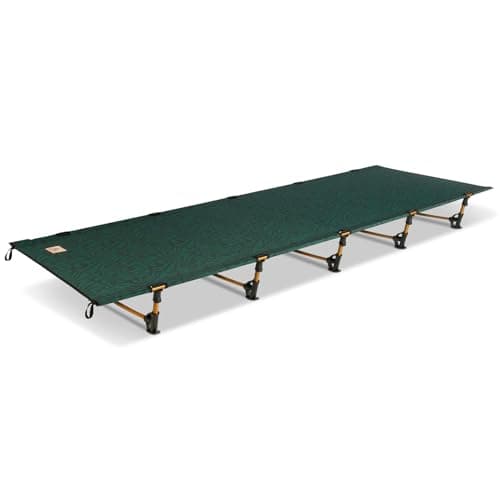
- Sleeping surface
- 75" x 27.5"
- Packed size
- About 17" x 7"
- Weight
- 4 lb 12 oz
- Weight capacity
- 300 lbs
- Height
- 6.7"
- Frame
- Aluminum with 600D ripstop polyester
About this pick
The Lowdown hits a genuine sweet spot: an aluminum-framed cot that packs to about 17 x 7 inches, weighs 4 lb 12 oz, and offers a 27.5-inch deck that gives side sleepers more room than most low cots. Its 6.7-inch height works inside low tents without giving up an elevated sleep surface.
Strengths
- Packed footprint is among the smallest of any steel-free cot at this price point
- 27.5" width is noticeably more livable for side sleepers than narrower budget competitors
- Lightweight aluminum frame with injection-molded components holds up well to regular car-camping use
Weaknesses
- 75" length is a tight fit for sleepers taller than 6 feet
- Five collapsible legs can feel fiddly to reassemble after packing; small retention bands are easy to lose
Kit Score breakdown
TETON SPORTS
Teton Sports Outfitter XXL Camping Cot
Editor's Choice
Kit Score 8.3/10
$149.99 Price checked Oct 23, 6:22 AM CDT
Best for: Larger-framed campers, base-camp hunters, and anyone who needs a genuinely wide sleep surface and high weight rating without spending premium prices.
- 600 lb weight capacity is the highest available from a major brand in this price range
- At 26 lbs with a 45" packed length, this is a car-camping-only proposition
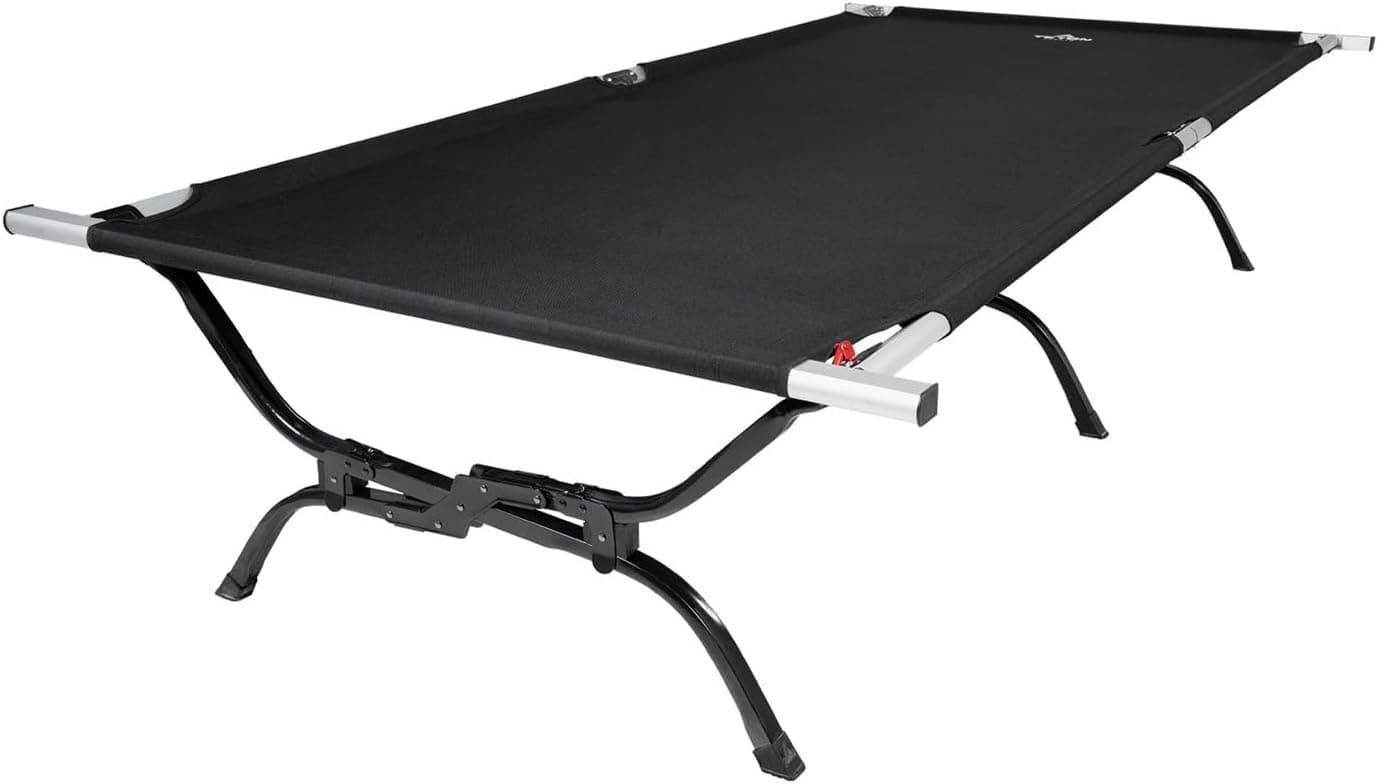
- Sleeping surface
- 80" x 35.5" (86" x 45" outer)
- Packed size
- 45" x 7.5" x 13"
- Weight
- 26 lbs
- Weight capacity
- 600 lbs
- Height
- 19.5"
- Frame
- Aluminum frame, steel S-legs, 600D polyester canvas
About this pick
The Outfitter XXL is built for large-framed adults and base-camp setups where packability is not the priority. Its 600 lb rating, 80 x 35.5-inch sleeping deck, and 19.5-inch height create substantially more room than a standard cot, while the pivot arm provides leverage for the final end bar.
Strengths
- 600 lb weight capacity is the highest available from a major brand in this price range
- 35.5" wide sleeping surface gives side sleepers genuine room; fits most adults regardless of build
- Patented pivot arm lever mechanism makes assembly straightforward despite the cot's large size
Weaknesses
- At 26 lbs with a 45" packed length, this is a car-camping-only proposition
- Needs a large tent: the in-use footprint is 86 x 45 inches
Kit Score breakdown
See all picks in Best camping cots 2026: 5 picks for every camp
Keep going
Complete loadoutCamp sleep systemFive coordinated pieces that solve shelter, insulation, cushioning, head support, and light for nights outside.

Researched, not hands-on tested
Updated Sep 25, 2026Our recommendations draw on manufacturer documentation, retailer listings, owner feedback, and comparisons with alternatives.
As an Amazon Associate I earn from qualifying purchases. We may earn a commission from links here, at no extra cost to you. How we research →