
Collapsible water bottles come in two distinct materials, and the one you choose shapes nearly every part of the experience: how small it packs, how long it lasts, and whether you actually want to drink from it.
How each material collapses
The physical construction differs completely between the two, and it affects daily use more than any spec sheet suggests.
Silicone bottles like the HYDAWAY Collapsible Water Bottle collapse by folding in a disc-by-disc accordion stack or by squeezing flat like a pancake. The material has enough memory that it springs back reliably and holds whatever shape you press it into. You can collapse a silicone bottle one-handed by pressing down on the top.
TPU (thermoplastic polyurethane) bottles like the HydraPak Stow are thinner-walled and roll or fold flat from the bottom up, much like a toothpaste tube. Most designs have a rigid collar at the top and a flexible body below. Rolling takes both hands and a flat surface is helpful. The upside is that a rolled TPU bottle is genuinely flat and slips into the side pocket of a daypack without bulk. The similar-looking Platypus SoftBottle rolls the same way but is made from a nylon and polyethylene film, not TPU.
How to collapse a roll-style TPU bottle
Empty completely
Drink or pour out every drop; air trapped inside resists rolling.
Loosen the cap
Cracking the lid lets air escape as you compress.
Roll from the bottom
Fold the base up in thirds, pressing firmly as you go.
Clip or band the roll
Use the integrated loop or a rubber band to keep it tight.
Drop it in a pocket
A fully rolled 500 ml TPU bottle fits in a jacket pocket.
Weight and packed size
TPU is the clear winner if grams matter. The HydraPak Stow 500 ml weighs 40 g, while silicone bottles like the 25 oz HYDAWAY weigh about 179 g. That gap adds up on a multi-week trip where you carry two or three bottles. On packed size, TPU also wins: a rolled TPU bottle is close to flat, while even a well-collapsed silicone bottle has real volume from the stacked discs.
If you are optimizing a carry-on bag or a minimalist daypack, TPU gives you more space back.
Durability and temperature limits
Silicone is the more durable long-term material. It resists UV degradation, handles boiling water (Que rates its silicone to 230°C / 450°F and HYDAWAY to 250°C / 482°F), and does not crack or become brittle with age. The plastic caps and collars are usually the parts that wear first, and they are not rated as high as the silicone body.
TPU is durable enough for everyday travel but has real limits. It softens with sustained heat, so filling a TPU bottle with boiling water risks warping the body or weakening the seams. HydraPak, for example, rates its TPU products for warm water up to 60°C (140°F). TPU also becomes stiffer in cold weather, which makes rolling harder at altitude or in winter. In direct sunlight over years, cheap TPU can yellow and become brittle.
If you fill your bottle with hot tea or coffee daily, silicone is the only sensible choice.
For puncture and abrasion resistance, both materials outperform rigid plastic in that they flex rather than crack. Neither should be used as a primary hydration vessel for scrambling terrain where a hard bottle makes more sense.
Taste, odor, and cleaning
This is where silicone earns its price premium. Food-grade silicone is very stable and resists picking up flavors from water, coffee, or sports drinks. It is not completely immune: a lab study of silicone baking moulds found they absorbed some fat with repeated use, and some owners notice a mild silicone taste when water sits for hours. A quick rinse after each fill keeps it neutral.
TPU is also food-safe; in the US, both silicone elastomers and certain polyurethane resins are covered for repeated food contact under FDA rule 21 CFR 177.2600. With regular use, TPU bottles can develop a faint plastic smell, especially if left with liquid inside for extended periods. It is not a health concern, but it is noticeable. Leaving the cap off between uses and rinsing with a dilute baking soda solution reduces it significantly.
Cleaning both types requires some attention because of the collapsed geometry. Wide-mouth openings (most good collapsible bottles have them) allow a bottle brush to reach the interior. Most major brands, including HydraPak, HYDAWAY, Que, and Platypus, say their bottles are top-rack dishwasher safe. Check your model's care instructions and keep TPU bottles out of the heated-dry cycle.
Leak-proofing and closures
Both materials can be made leak-proof, but the weak point is always the closure, not the body. Look for a screw-top lid with a silicone gasket rather than a push-pull or bite valve if you are putting the bottle in a bag with electronics or documents.
Silicone bottles often use a one-piece molded top that integrates cleanly with the body, reducing the number of seam points. TPU bottles have a rigid collar bonded to the flexible body, and that bond point is where failures tend to occur after heavy use or repeated heat exposure.
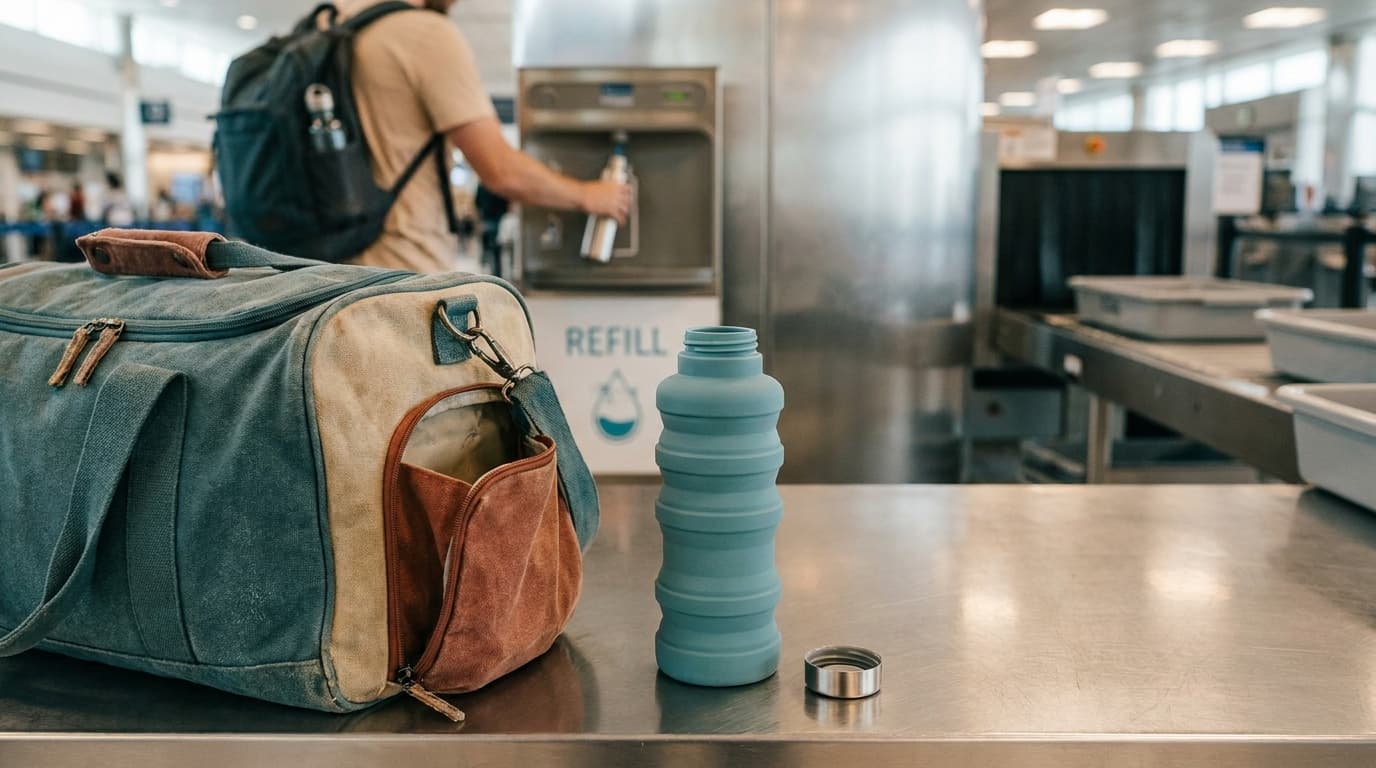
For air travel, TSA lists empty water bottles as allowed in carry-on and checked bags. The 3-1-1 liquid rule applies to the contents, not the container, so an empty collapsible bottle is fine, though the officer at the checkpoint always makes the final call.
Cost
TPU bottles usually cost less than silicone ones from brands like HYDAWAY, Que Bottle, and the STOJO Collapsible Sports Bottle. The price gap is real, but silicone's longer lifespan means the per-year cost often converges.
Budget travel and occasional use: TPU is a sensible spend. Daily carry over multiple years: silicone pays back the difference.
Where these numbers come from
| Claim | Source | Checked |
|---|---|---|
| HydraPak Stow 500 ml: TPU body, 40 g (1.4 oz) | HydraPak, Stow 500 ml | Sep 2026 |
| HydraPak TPU products: BPA- and PVC-free, warm water up to 60°C / 140°F, top-rack dishwasher safe | HydraPak, hydration reservoirs | Sep 2026 |
| HydraPak drink tube is TPU with a silicone bite valve | HydraPak, HydraFlex tube | Sep 2026 |
| Platypus SoftBottle film is nylon and polyethylene | Cascade Designs, Platypus SoftBottle | Sep 2026 |
| HYDAWAY 25 oz: 179 g (6.3 oz), collapses to 1.5 in (4 cm) | HYDAWAY, 25 oz collapsible bottle | Sep 2026 |
| Que silicone safe for liquids up to 230°C / 450°F; not recommended above 60°C / 140°F for handling | que Bottle, FAQ | Sep 2026 |
| Silicone baking moulds took up to 8 g of fat per kg of elastomer with repeated use | Helling et al., Food Additives and Contaminants A 27(3), 2010 | Sep 2026 |
| Silicone elastomers and certain polyurethane resins are listed for repeated-use food contact, with extractive limits | 21 CFR 177.2600, rubber articles intended for repeated use | Sep 2026 |
| Empty water bottles allowed in carry-on and checked bags; the officer makes the final decision | TSA, empty water bottle | Sep 2026 |
Weights and temperature limits are the brands' published specs; odor and handling notes summarize owner feedback, not a Kit Authority test.
Frequently asked questions
Can I put a collapsible water bottle in a carry-on bag?
Yes. TSA requires the bottle to be empty when you pass through the checkpoint. Once through security, fill it at a water fountain or airport bottle-filling station. TSA lists empty water bottles as allowed in carry-on and checked bags, though the officer at the checkpoint makes the final call.
Which type is better for hot beverages like tea or coffee?
Silicone. Silicone bodies are rated well above boiling (Que lists 230°C), though Que advises against drinks hotter than 60°C because the thin walls get too hot to hold. HydraPak rates its TPU products to 60°C (140°F), which is below the temperature of freshly boiled water. Filling a TPU bottle with boiling liquid risks warping the body or weakening the seam bond over time.
How do I get rid of the plastic taste in a new TPU bottle?
Fill the bottle with a mixture of water and two tablespoons of baking soda, seal it, and leave it overnight. Rinse thoroughly the next day. Repeat once if the smell persists. Leaving the cap off when the bottle is not in use and avoiding leaving liquid in it for long periods will prevent the taste from returning.
Is silicone or TPU better for a hydration bladder tube?
The same material trade-offs carry over from bottles to reservoir tubing, with one twist. Silicone drink tubes stay softer and more flexible in the cold, resist odor and taste transfer better, and are easier to clean, though major reservoir brands such as HydraPak pair a TPU drink tube with a silicone bite valve. TPU tubing is firmer, kinks a little more readily, and can hold a plastic taste longer when new, but it is thinner-walled and packs down smaller. For winter use and taste-sensitive drinkers, silicone tubing is the better pick; for the lightest, most packable setup, TPU is acceptable. Whichever you run, the tube is the first place mold grows, so it needs its own brush at every cleaning.
For specific picks in both materials, see our guide to the best collapsible water bottles. Browse all travel guides or read how we research and rate gear.
Recommended gear
Our current top picks from the Best collapsible water bottle for travel: 2 picks by size guide, if you are ready to buy.
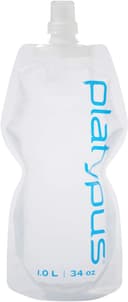
Best for: Ultralight hikers and frequent flyers who want the lightest possible packable bottle at the lowest price.
- Weighs about 1 oz empty yet holds a full liter
- Floppy body requires two hands to drink from comfortably, and the bottle will not stand alone when less than half full
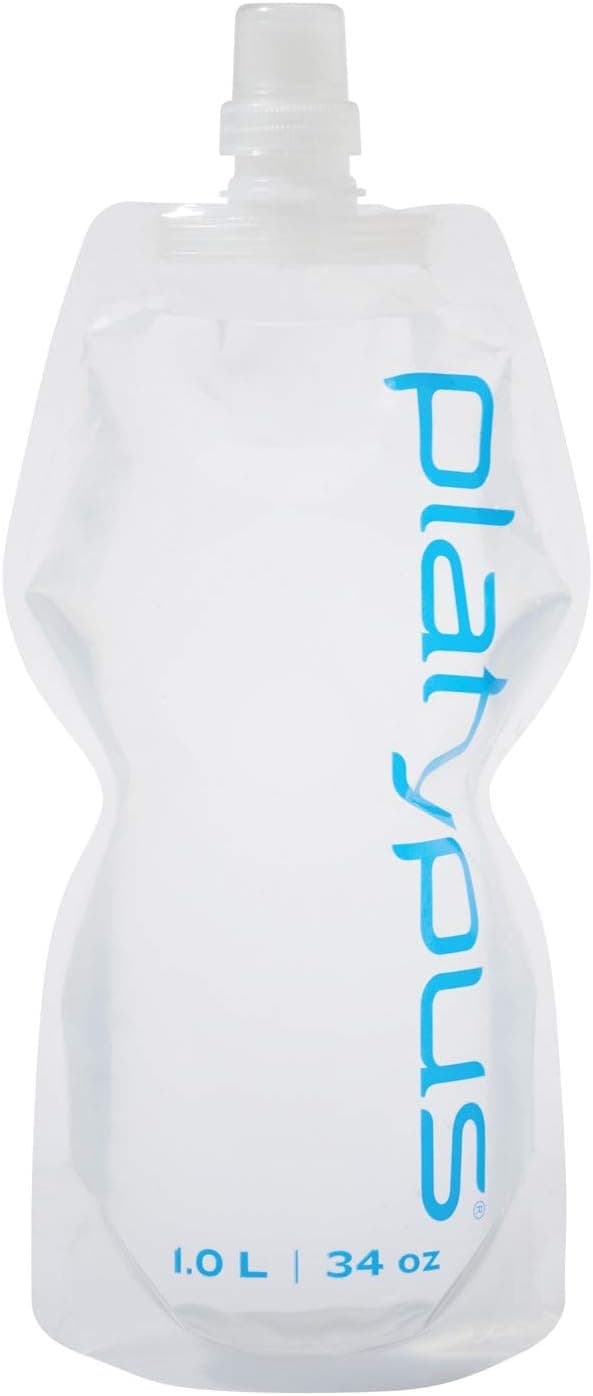
- Capacity
- 1.0 L (34 fl. oz.)
- Weight
- 1.0 oz (29 g) per Platypus; 1.2 oz per the Amazon listing
- Material
- Nylon/polyethylene film body; polypropylene cap (Closure or Push-Pull)
- Certifications
- BPA-free, BPS-free, phthalate-free
- Origin
- Made in USA
- Dishwasher safe
- Yes (expand fully before washing)
About this pick
The Platypus SoftBottle is a roughly 1 oz nylon and polyethylene flask that rolls or folds flat when empty and holds a full liter, an unmatched weight-to-capacity ratio for travel and ultralight hiking. It comes with a Closure Cap or a Push-Pull Cap, accepts any threaded Platypus lid, and Platypus sells it as taste-free.
Strengths
- Weighs about 1 oz empty yet holds a full liter
- Sold as taste-free and BPA-, BPS-, and phthalate-free
- Made in USA with a field-tested track record across backpacking and long-haul travel
Weaknesses
- Floppy body requires two hands to drink from comfortably, and the bottle will not stand alone when less than half full
- Narrow mouth (compared to wide-mouth silicone designs) makes thorough drying after use slower
Kit Score breakdown
HYDRAPAK
HydraPak Stow Collapsible Water Bottle (500ml)
BEST BUDGET
Kit Score 8.4/10
$13.93 Price checked Oct 23, 4:16 PM CDT
Best for: Ultralight day hikers, backpackers, and travelers who want an emergency or secondary bottle that weighs almost nothing and disappears into a pocket when not in use.
- Weighs 1.6 oz and rolls flat to near nothing, with a self-sealing silicone nozzle under a flip cap
- Floppy and awkward to hold when partially empty; no structure means single-handed pouring is tricky
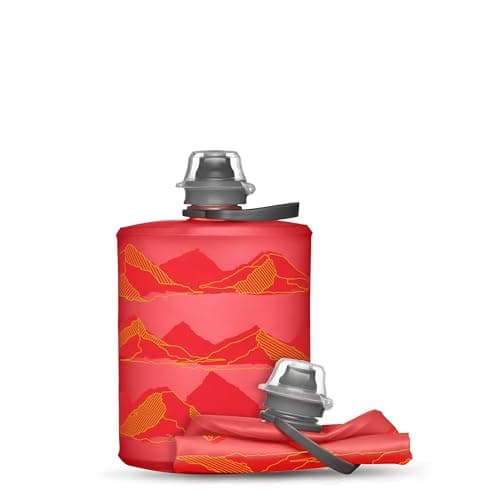
- Capacity
- 500 ml (17 oz)
- Material
- Abrasion-resistant TPU, BPA and PVC free
- Collapsed size
- Rolls flat; 6.8 x 4.0 in flat
- Weight
- 1.6 oz (45 g)
- Filter compatible
- Yes, 28 mm threads; fits HydraPak 28 mm filter kit
- Freezer/dishwasher safe
- Yes
About this pick
The Stow is a TPU squeeze flask that rolls down to almost nothing when empty and slips into a back pocket, ski jacket, or the hip belt of a pack. At 1.6 oz (45 g) it weighs next to nothing, and its 28 mm threads take HydraPak's 28 mm filter kit.
Strengths
- Weighs 1.6 oz and rolls flat to near nothing, with a self-sealing silicone nozzle under a flip cap
- 28 mm threads accept HydraPak's filter kit, turning it into a usable backcountry hydration system
- 4.3 stars across 2,700+ Amazon reviews with consistent praise for durability and packability
Weaknesses
- Floppy and awkward to hold when partially empty; no structure means single-handed pouring is tricky
- Some owners report a plastic taste in the first few uses that fades after washing; a minority found it persistent
Kit Score breakdown
See all picks in Best collapsible water bottle for travel: 2 picks by size
Keep going
Free toolHiking Water CalculatorHow much water to carry for the distance and the heat.
Researched, not hands-on tested
Updated Sep 25, 2026Our recommendations draw on manufacturer documentation, retailer listings, owner feedback, and comparisons with alternatives.
As an Amazon Associate I earn from qualifying purchases. We may earn a commission from links here, at no extra cost to you. How we research →