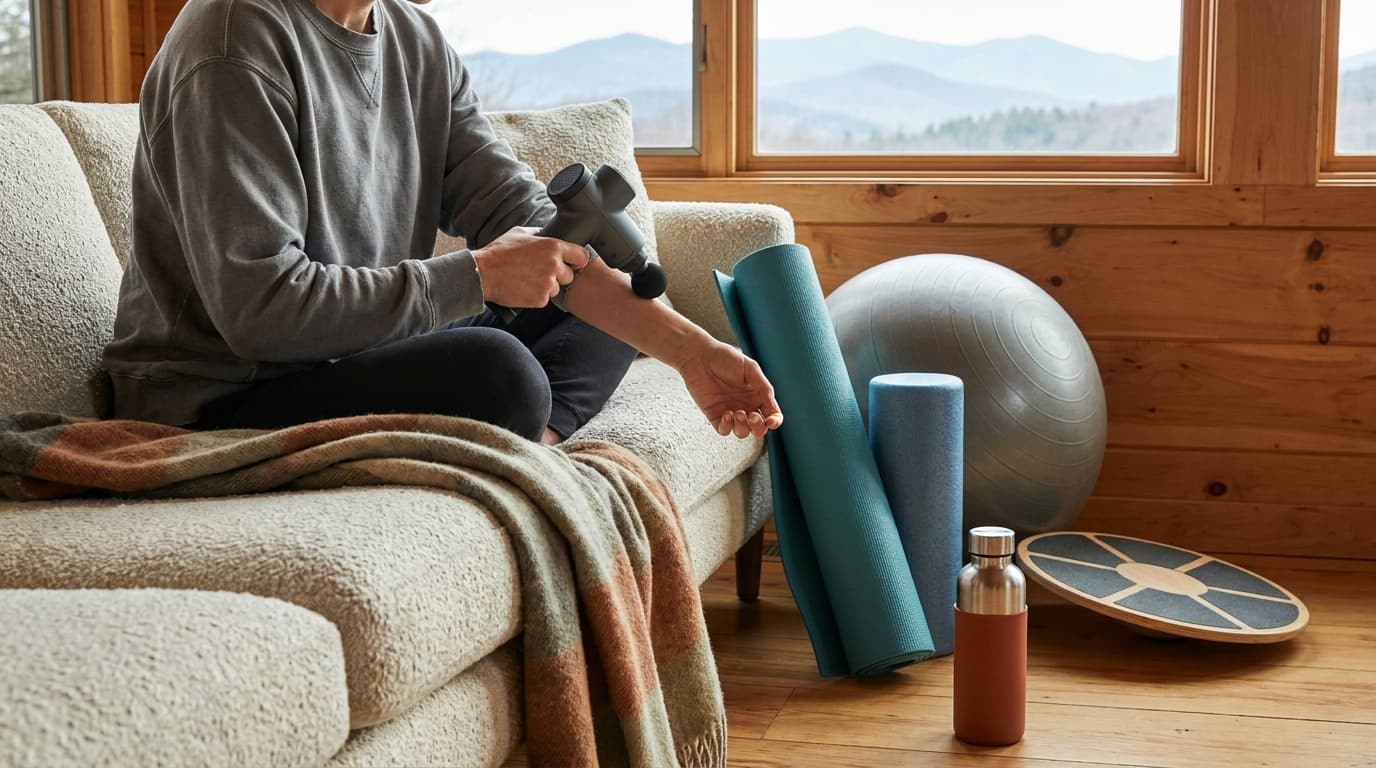
A percussion massage gun is a genuinely useful recovery tool when used correctly. Used carelessly, it can bruise tissue, blunt your power output before a big lift, or mask a warning signal you should be paying attention to.
Before vs after workouts
Before: primer, not a deep-tissue session
A massage gun is a reasonable warm-up tool. Short bursts of percussion increase local blood flow and can nudge range of motion upward before you need it.
The protocol is deliberately brief: 30 to 60 seconds per muscle group, at a low-to-moderate speed setting, working the muscles you are about to load. That is enough to wake tissue up. More is counterproductive.
The timing rule matters. A 2023 systematic review in Frontiers in Physiology (11 studies, 281 participants) found that using a massage gun less than 5 minutes before explosive or strength work measurably harms power output. One study within that review recorded a 3.1% decrease in jump height after brief calf treatment immediately before jumping. That is a meaningful performance cost for athletes and a good reason to finish your gun work at least 5 minutes before you lift, sprint, or jump.
After: where the recovery research is strongest
Post-exercise percussion has a clearer evidence base. A 2021 Frontiers in Physiology meta-analysis found that applying percussion therapy within 30 minutes of finishing a session produced the most significant reductions in perceived soreness at the 24-hour and 48-hour marks. The post-workout window is real; if you leave it until the next morning, you have already let the most effective window close.
For soreness reduction, use low frequency, below 2,400 percussions per minute (roughly below 40 Hz on most devices). For flexibility and range-of-motion work at the end of a session, higher frequency above that threshold is more effective. The research recorded a 5.4-degree increase in ankle dorsiflexion with 2-minute high-frequency application in that same range.
Start once your heart rate returns to a normal resting level. Applying a gun while still flushed from exertion adds noise, not benefit.
How long to use it per area
The duration depends on your goal:
- Warm-up pass: 30 to 60 seconds per area. Long enough to increase circulation, short enough that you are not pre-fatiguing the muscle.
- Recovery pass: 2 to 3 minutes per large muscle group (quads, hamstrings, glutes, lats, calves). This is the standard range for post-exercise use.
- Targeted soreness: up to 5 minutes on a particularly sore area is acceptable, provided you keep the attachment moving rather than parking it.
The 30-second rule applies throughout: never hold the device stationary on one spot for more than 30 seconds at a time. Parking the attachment concentrates vibration in a way that can cause bruising rather than relief. Keep gliding slowly along the muscle fiber direction, roughly one inch per second.
Intensity: comfortably uncomfortable is the ceiling
Sports Injury Physio describes the target intensity as "comfortably uncomfortable," which translates to a 4 to 6 out of 10 on a discomfort scale. Applying more pressure or using a higher speed setting beyond that point does not speed up recovery and increases bruising risk over soft tissue.
Always start on the lowest speed setting and work up only if the tissue genuinely needs it; a gun with clearly stepped speeds, like the five-speed Theragun Prime, makes those increments easy to manage. Many people get better results staying at moderate speed for longer than cranking to maximum for a shorter period.
Harder is not faster. Pushing a gun into the same spot at maximum intensity does not accelerate recovery. It just increases the chance of bruising.
Attachment heads: which one to use where
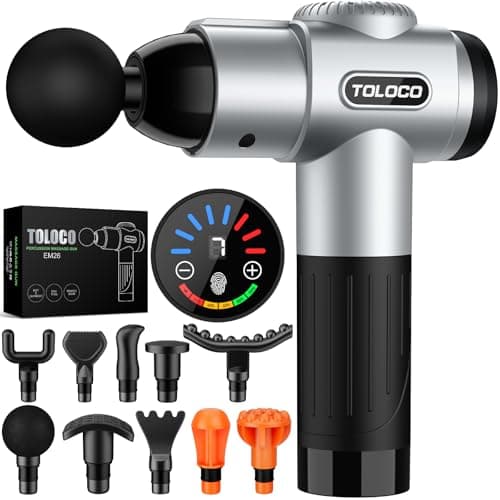
Most guns ship with four to six heads; even a budget pick like the TOLOCO EM26 includes a full set. Each serves a distinct function.
Choosing the right attachment
Ball head
General-purpose option for large muscle groups. Start here if you are unsure. Suitable for glutes, quads, hamstrings, calves, and upper back.
Flat head
Broad, even contact for large flat surfaces. Good for the quads, hamstrings, chest, and upper back when you want coverage over a wide area without the point focus of the ball.
Bullet head
Small, concentrated tip. Use for trigger points, stubborn knots, the muscle belly of the forearm, and the calves where you need focused pressure. Not for bony areas.
Fork (U-head)
The prongs sit on either side of a muscle rather than pressing directly on it. Designed for muscles alongside the spine, the Achilles tendon, and the back of the neck (on the muscle, never the vertebrae or arteries).
Wedge
Angled edge for scraping-style work. Useful along the IT band and around the shoulder blades. Move it directionally rather than pressing and holding.
Where not to use it
This list is not optional. These are the areas where percussion creates genuine risk.
Anatomical no-go zones:
- The spine directly (vertebrae, not the muscles beside them)
- The carotid and jugular arteries in the neck
- The head and face
- Bony prominences: knees, elbows, ankles, wrists
- The armpit and groin (major vascular structures)
- Open wounds, bruises, rashes, or inflamed skin
- Any area with reduced or impaired sensation
When to avoid the gun entirely
Skip percussion entirely in these situations:
- Known blood-clotting disorder, DVT, or use of anticoagulant medication without clearance
- Osteoporosis or osteopenia (percussive force over low-density bone can cause fractures)
- Fractures or suspected fractures
- Torn muscles, tendons, or ligaments
- Acute injury within the first 48 to 72 hours, when rest and ice are still indicated
- Skin rashes or open skin in the target area
- Pregnancy on the lower back, abdomen, or recognized pressure points (consult your doctor)
- Any condition causing impaired circulation or reduced sensation
If you are uncertain, a physiotherapist can assess your specific situation.
Common mistakes
Most bad outcomes with massage guns trace back to the same handful of errors.
Mistakes to avoid
Pressing into bone
The attachment should land on the muscle belly, not the bone beneath it. If you feel hard resistance, move. Bone is not muscle.
Parking in one spot
Holding the device stationary for more than 30 seconds concentrates impact and can bruise. Keep it moving along the muscle fiber.
Starting on maximum speed
High settings on cold tissue are uncomfortable and counterproductive. Start low, assess, and step up only if needed.
Ignoring sharp or shooting pain
Dull pressure is normal. Sharp, shooting, or radiating pain is not. Stop and assess rather than pushing through it.
Using it on an acute injury
Percussion over a fresh strain or sprain (within 48 to 72 hours) adds inflammation to an already inflamed area. Wait until the acute phase has passed.
Holding it at the wrong angle
The attachment face should sit flat and perpendicular to the skin. An angled approach concentrates force unevenly and reduces effectiveness.
Technique recap
- Hold the attachment flat and perpendicular to the skin surface
- Let the motor do the work; do not add downward pressure
- Glide slowly along the muscle fiber direction at roughly one inch per second
- Start on the lowest speed setting
- Keep intensity at 4 to 6 out of 10 on a discomfort scale
- Never park on one spot for more than 30 seconds
For help choosing a device, see our guide to the best massage guns.
How long should I use a massage gun on each muscle group?
It depends on your goal. Before a workout, 30 to 60 seconds per area is enough to wake tissue up without fatiguing it. After a workout, 2 to 3 minutes per large muscle group (quads, hamstrings, glutes, lats) is the standard range for recovery. On a particularly sore spot, up to 5 minutes is reasonable. The key rule: keep moving. Parking the device on one spot for more than 30 seconds at a time is a common mistake that can bruise rather than relieve.
Should I use a massage gun before or after my workout?
Both have legitimate uses, but with different protocols. Before: use it as part of your warm-up at low-to-moderate speed, focusing on the muscles you are about to train, for 30 to 60 seconds each. Do not use it less than 5 minutes before heavy or explosive lifts. Research shows a measurable drop in power output when percussion is applied immediately before strength or speed work. After: use it once your heart rate settles, at low frequency for soreness reduction or higher frequency for mobility work. The post-workout window within 30 minutes of finishing has the strongest evidence for reducing next-day soreness.
Are there situations where I should not use a massage gun at all?
Yes. Skip it entirely if you have a known blood-clotting disorder, DVT, or are on blood thinners without medical clearance. Also avoid it on fractures, suspected fractures, torn muscles or ligaments, areas of active inflammation within the first 48 to 72 hours after a strain or sprain, and any area with reduced sensation. People with osteoporosis or osteopenia should exercise caution because percussive force over low-density bone can cause fractures. During pregnancy, avoid the lower back, abdomen, and any recognized pressure points, and check with your doctor first. If you are unsure, a physiotherapist can advise on your specific situation.
Browse more fitness gear guides or see how we research and rate the products and techniques we cover.
Recommended gear
Our current top picks from the The best massage guns for muscle recovery, budget to premium guide, if you are ready to buy.
EKRIN ATHLETICS
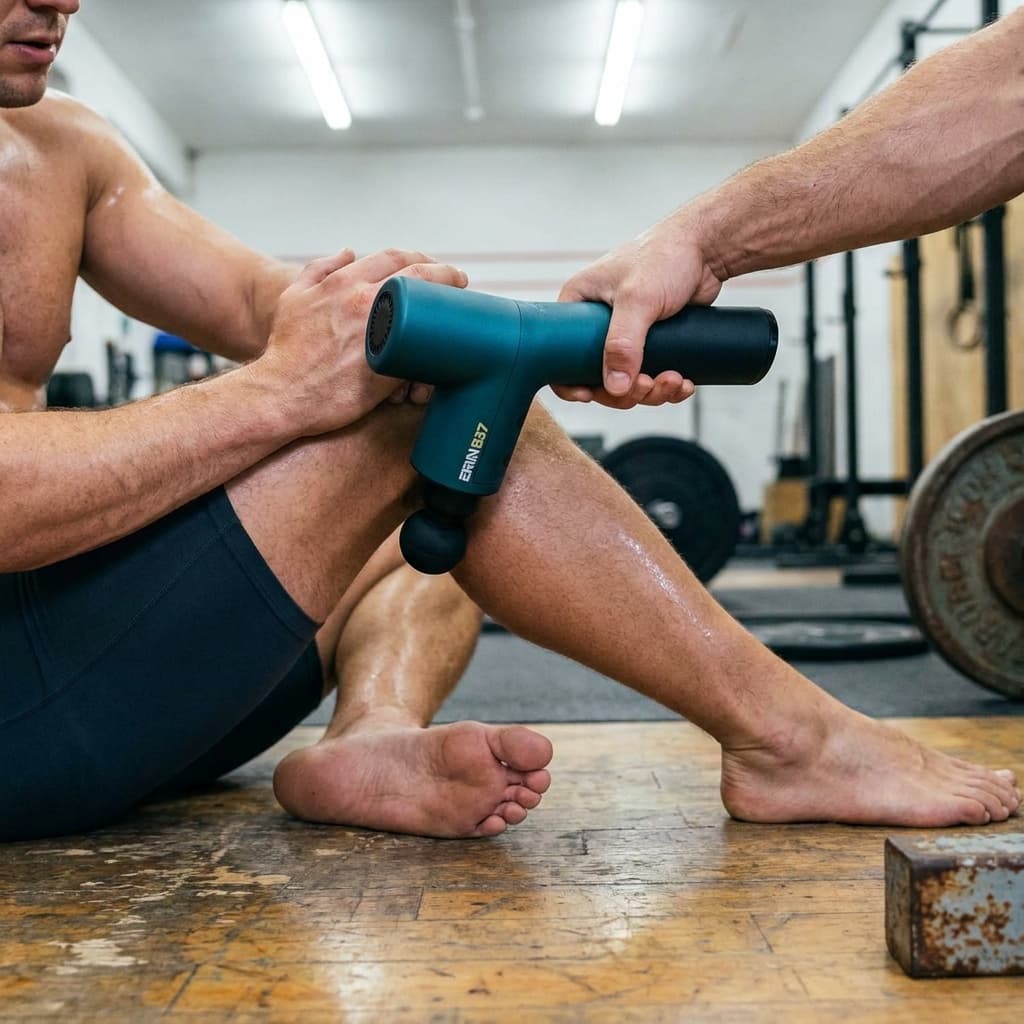
Ekrin Athletics B37v2 Massage Gun
Best Value
Kit Score 8.2/10
$224.99 Price checked Oct 23, 4:16 PM CDT
Best for: Athletes and regular gym-goers who want a powerful, ergonomic gun with serious stall force and won't miss app-connected features.
- 56 lbs stall force reliably holds speed when pressing into dense muscle groups
- No Bluetooth, app connectivity, or display screen
- Amplitude
- 12 mm (independent measurement)
- Stall force
- 56 lbs (independent test; not an Ekrin spec)
- Speed range
- 1,400–3,200 RPM across 5 levels
- Noise level
- 49–61 dB measured independently (Ekrin lists 35–55 dB)
- Battery life
- Up to 8 hours (Ekrin claim; USB-C PD)
- Weight
- 2.2 lbs
About this pick
The B37v2 is a direct update to one of the most consistently recommended mid-range massage guns: 56 lbs of stall force keeps it working under real pressure, the 15-degree angled handle reduces wrist strain during back and shoulder use, and the 8-hour battery life is among the longest in the category. A lifetime warranty (register within 30 days if bought outside Ekrin) comes at a price well below the major brand equivalents.
More specifications
- Attachments
- 4 heads included (silicone ball, bullet, flat, fork)
Strengths
- 56 lbs stall force reliably holds speed when pressing into dense muscle groups
- 15-degree angled handle noticeably reduces wrist and forearm fatigue
- Lifetime warranty adds long-term value (battery covered for 2 years)
Weaknesses
- No Bluetooth, app connectivity, or display screen
- 12 mm amplitude is mid-range; users seeking maximum deep-tissue penetration may want 16 mm
Kit Score breakdown
BOB AND BRAD
Bob and Brad D6 Pro Massage Gun
Editor's Choice
Kit Score 8.5/10
$199.98 Price checked Oct 23, 4:16 PM CDT
Best for: Strength athletes and physical therapy users who prioritize maximum percussion depth and stall resistance over light weight.
- A rated 16 mm amplitude and 85 lbs of stall force are the deepest specs in this price range
- At about 2.8 lbs it is one of the heaviest guns here; fatigue sets in during longer self-massage sessions
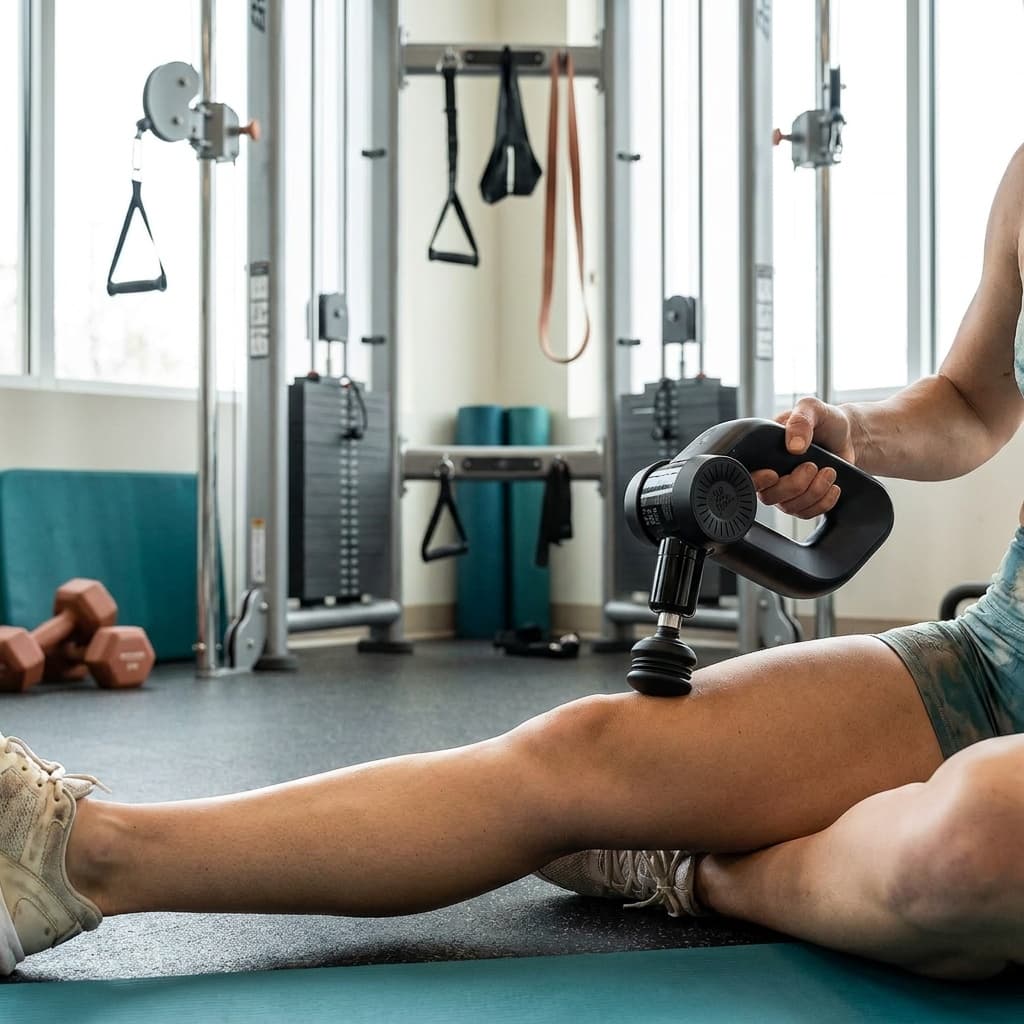
- Amplitude
- 16 mm (maker rating)
- Stall force
- 85 lbs (maker rating)
- Speed range
- 1,500–2,500 RPM across 6 levels plus 4 dynamic modes
- Noise level
- 57–68 dB
- Battery life
- 1.5–2 hours continuous (advertised 3 hours; USB-C)
- Weight
- 2.8 lbs
About this pick
The D6 Pro is rated for a 16 mm stroke and 85 lbs of stall force, making it one of the most powerful deep-tissue performers under $260. Seven attachment heads, six speed levels, four dynamic modes, and an OLED display round out a feature set that mirrors guns costing $150 more. The main trade-offs are weight (about 2.8 lbs causes arm fatigue on long sessions) and a battery that runs short of advertised numbers in real use.
Strengths
- A rated 16 mm amplitude and 85 lbs of stall force are the deepest specs in this price range
- Seven heads including spade and air-cushion attachments give precise control for different muscle types
- FSA and HSA eligible, lowering effective out-of-pocket cost for eligible buyers
Weaknesses
- At about 2.8 lbs it is one of the heaviest guns here; fatigue sets in during longer self-massage sessions
- Battery life in continuous use trails advertised figures; plan on recharging every session or two
Kit Score breakdown
THERABODY
Theragun Prime (6th Gen)
Best Theragun
Kit Score 7.9/10
$329.99 Price checked Oct 23, 4:16 PM CDT
Best for: Buyers who want the Theragun grip, app routines, and brand support at the lowest price in the full-size Theragun line.
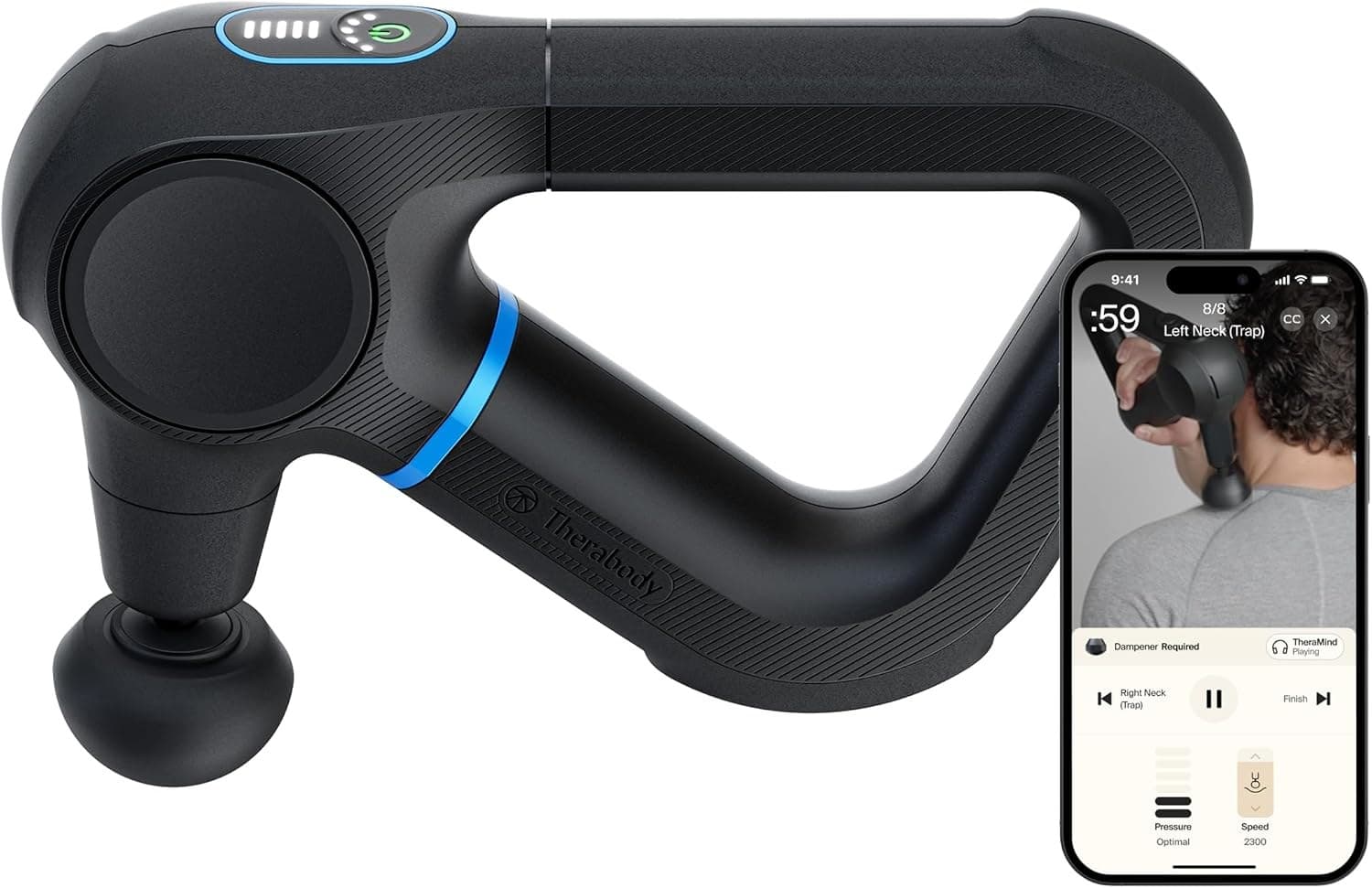
- Triangle grip with a wider opening makes solo work on the back and shoulders easier
- 30 lb force rating trails cheaper guns built for heavy pressure
- Amplitude
- 16 mm (Therabody figure via MedGrade)
- Stall force
- 30 lbs (Therabody figure via MedGrade)
- Speed range
- 1,750–2,400 PPM across 5 speeds
- Noise level
- 55 dB (maker figure via MedGrade)
- Battery life
- Up to 120 minutes (Therabody; USB-C)
- Weight
- 32 oz (2 lbs)
About this pick
The current Theragun Prime keeps the 16 mm stroke and patented triangle grip that made the line the most-recommended brand-name gun, then adds a rubberized shell Therabody rates for drops up to 10 feet, an LED pressure readout, USB-C charging, and app routines through the Therabody app. The trade-offs are a 30 lb force rating, two attachments in the box, and a 1-year warranty.
More specifications
- Attachments
- 2 (Dampener, Standard Ball)
- Warranty
- 1-year limited
Strengths
- Triangle grip with a wider opening makes solo work on the back and shoulders easier
- 16 mm stroke matches Therabody's premium models
- Rated to survive drops up to 10 feet, with USB-C charging and an LED pressure readout
Weaknesses
- 30 lb force rating trails cheaper guns built for heavy pressure
- Ships with only two attachments and a 1-year warranty
Kit Score breakdown
See all picks in The best massage guns for muscle recovery, budget to premium
Keep going
Researched, not hands-on tested
Updated Jun 3, 2026Our recommendations draw on manufacturer documentation, retailer listings, owner feedback, and comparisons with alternatives.
As an Amazon Associate I earn from qualifying purchases. We may earn a commission from links here, at no extra cost to you. How we research →