We may earn a commission from links on this page, at no extra cost to you.
International travel adds three problems a domestic trip does not: different outlets, very long flights, and higher theft risk in crowded transit hubs. The rest is normal packing. Solve those three well and the trip gets easier. Here is the best pick for each need, with the full roundup behind every choice.
The best pick for each need
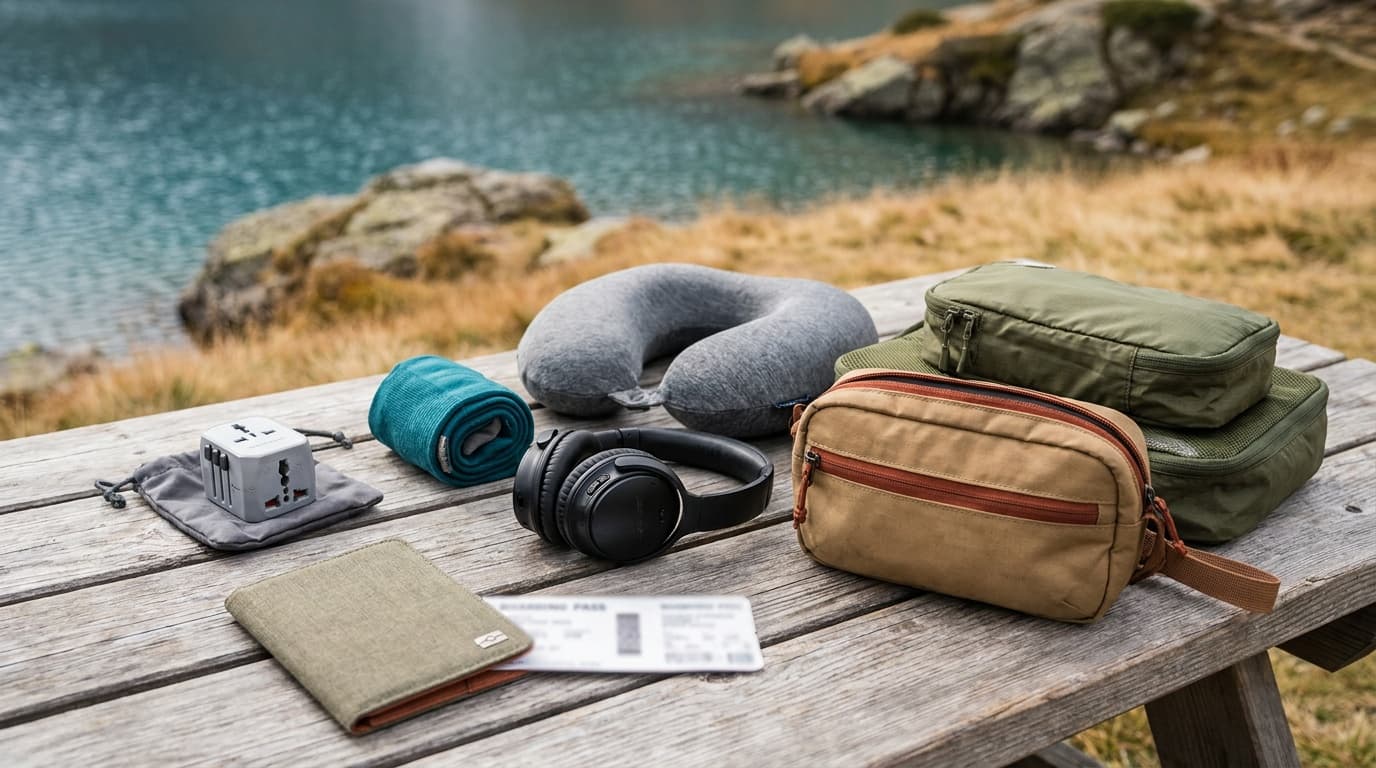
Power: a universal travel adapter. Your charger will not fit the wall in most of the world, and voltage varies. A universal adapter with built-in USB-C ports charges your phone, laptop, and earbuds off one plug. Start with the best travel adapters.
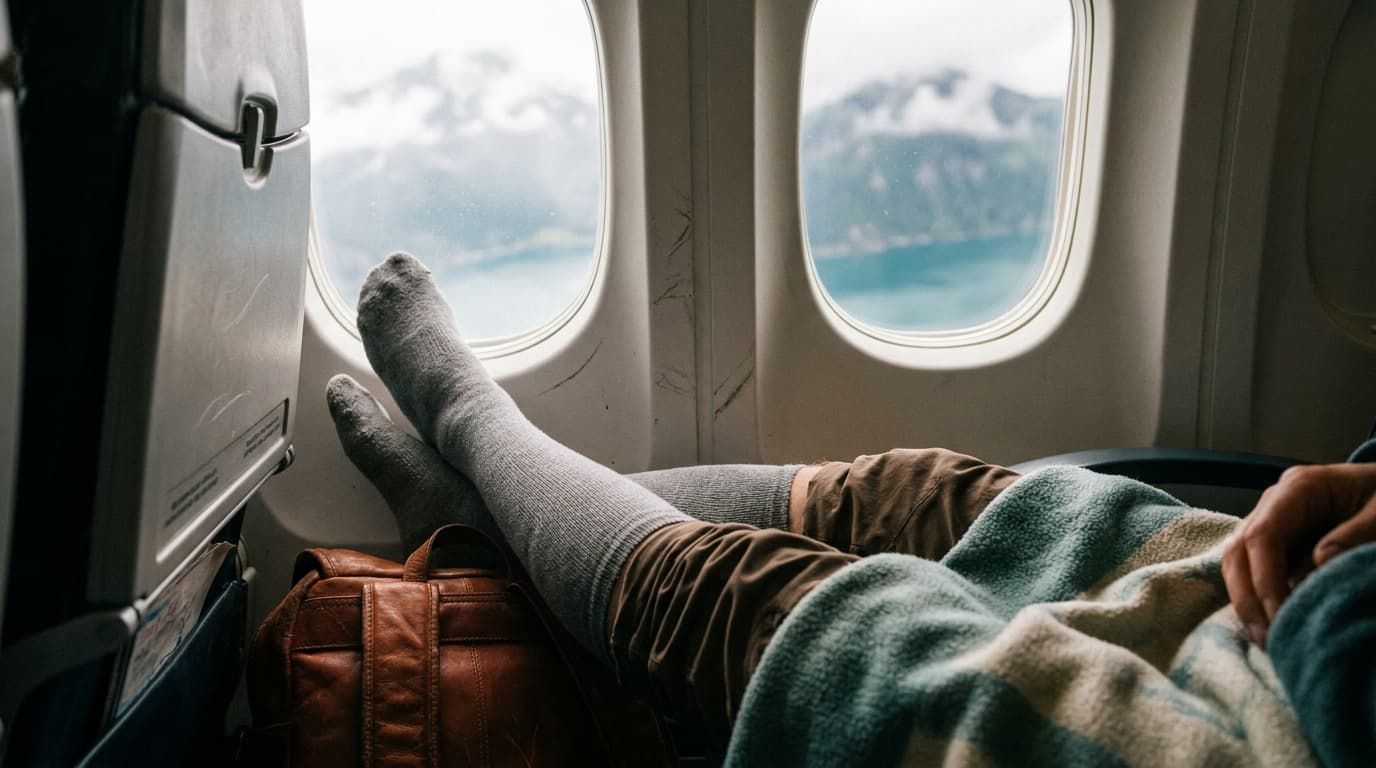
Legs: compression socks. On an 8-hour-plus flight, blood pools in your lower legs and ankles swell. Graduated compression socks keep circulation moving and cut the swelling, and they lower long-haul clot risk. See the best compression socks for travel.
Quiet: noise cancellation. Cabin noise sits around 85 dB for the whole flight, and fighting it for 10 hours is exhausting. Over-ear headphones block the most rumble; earbuds do nearly as well and pack smaller. Compare the best noise cancelling headphones and the best wireless earbuds for travel.
Sleep: a neck pillow. Sleeping upright without support wrecks your neck and guarantees you land jet-lagged. A structured neck pillow keeps your head from dropping. See the best travel pillows.
Security: an anti-theft bag. Pickpocketing happens in crowded stations, markets, and transit, not in your hotel. A slash-resistant anti-theft bag with locking zippers is the single best deterrent. See the best anti-theft travel bags.
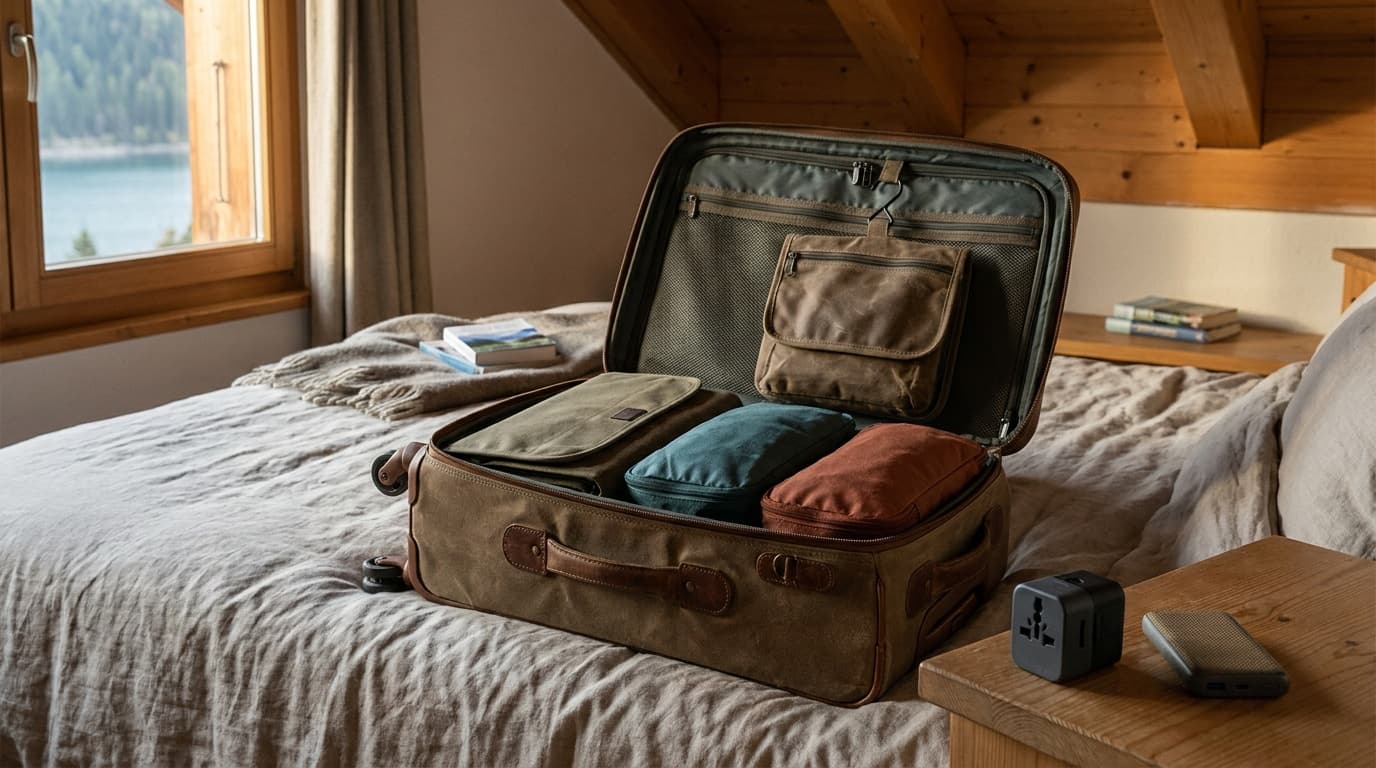
Organization: packing cubes. Living from one bag for weeks only works if you can find things and separate clean from dirty. Cubes also make a customs inspection painless. Start with the best packing cubes.
Luggage safety: TSA locks. Checked and hostel-stored bags need a lock that security can still open without cutting it off. See the best TSA luggage locks.
Power on the move: a power bank. Long transit days and unfamiliar outlets mean your phone dies when you need maps and boarding passes most. A power bank keeps it alive. See the best travel power banks.
Grooming: a shaver that charges over USB. A shaver that charges from a USB port runs off the same plug adapter as your phone, with no voltage converter. Compare hybrid, foil, rotary, and USB-C options in the best travel razors and shavers, or read our Philips OneBlade review for the hybrid that trims, edges, and shaves with one tool.
Health: a travel first aid kit. Pharmacies abroad are unfamiliar and sometimes closed when you need them. A compact kit with your own basics bridges the gap. See the best travel first aid kits.
Digital safety: protect the trip you cannot pack
Airport, hotel, cafe, and train Wi-Fi are convenient, but they are networks you do not control. A VPN encrypts the connection between your device and the VPN service. It does not make every website trustworthy, stop phishing, or replace software updates, but it is a useful layer when you need to check accounts or work while traveling.
The important distinction is simple: a VPN protects the connection; a password manager protects the credentials. Neither replaces device updates, multi-factor authentication, or skepticism about unexpected login links.
Mobile data abroad: decide before you land
You have three practical choices: pay your home carrier for international roaming, buy a local SIM after arrival, or install a travel eSIM before departure. Carrier roaming is usually the easiest but can be expensive. A local SIM can be cheaper for a long stay, but it costs time at the destination and may replace your usual SIM. A travel eSIM is the middle path: buy a data plan in advance, keep your physical SIM in place, and switch the phone's mobile-data line when you arrive.
Before paying for any eSIM, confirm two things in your phone settings: the device supports eSIM and it is carrier-unlocked. Then compare the plan's destination coverage, data allowance, duration, hotspot rules, and whether you need a normal phone number. Most travel eSIM plans are designed primarily for mobile data, so calls and texts may still run through your usual number or an internet app.
Install the eSIM while you still have reliable internet, but follow the provider's activation timing so the plan does not start too early. Keep your primary line from using mobile data abroad unless your carrier plan includes it; otherwise, background use can trigger roaming charges.
International travel is normal packing plus three physical fixes and one digital layer: the right plug, a survivable flight, theft-resistant gear, and safer access to your accounts.
How to pack it
Long-haul, organized to survive transit
Flight comfort in the personal item
Compression socks on before boarding, headphones or earbuds, neck pillow, and a power bank all live in the bag under the seat.
Power kit together
Adapter, cables, and power bank in one pouch so you are never digging for a charger at a gate.
Valuables locked and close
Passport, cards, and phone in the anti-theft bag worn in front through crowds and stations.
Cubes by category
One cube clean, one cube worn, one for tech and documents, so customs and dorm living stay simple.
Locks on checked and stored bags
TSA locks on anything you check or leave in a hostel, never on your carry-on personal item.
Frequently asked questions
What is the one thing people forget for international travel?
A universal power adapter with USB-C. Travelers remember chargers and forget that the plug will not fit the wall in most of the world, and that hotel front desks run out of loaner adapters fast. One universal adapter with built-in USB-C ports covers nearly every country and charges multiple devices at once.
Do I really need compression socks for a long flight?
On flights over about 4 hours, they help, and on 8-hour-plus long-hauls they are worth it for most people. Graduated compression keeps blood from pooling in your lower legs, cuts the ankle swelling that makes you land stiff, and lowers the risk of a clot on very long flights. Anyone with a circulation condition should treat them as essential.
How do I avoid pickpockets when traveling internationally?
Assume theft happens in transit, not your hotel: crowded stations, markets, and airport lines are where it occurs. A slash-resistant anti-theft bag with locking zippers, worn in front in crowds, is the strongest deterrent. Keep your passport and cards in that bag, not a back pocket, and split your cash across two places.
Every pick here links to the full roundup so you can match it to your budget and destination. Browse the travel hub for more, or see how we research the gear we recommend.
Keep going
Related buying guideBest packing cubes for travel in 2026Related guides

 Complete travel loadoutCarry-on travel kitBuild the complete kit
Researched, not hands-on tested
Updated Sep 2, 2026Our recommendations draw on manufacturer documentation, retailer listings, owner feedback, and comparisons with alternatives.
As an Amazon Associate I earn from qualifying purchases. We may earn a commission from links here, at no extra cost to you. How we research →
Related buying guide
Best packing cubes for travel in 2026